%201.svg)
When a cyclone forms in the Pacific or a chokepoint like the Strait of Hormuz makes the news, supply chain teams are left asking the same question: which of my containers are actually affected?
Getting that answer today usually means chasing it down manually, through calls, emails, or multiple points of contact. Each step adds time, and the answer that comes back is often incomplete or arrives without the context needed to act. By the time the picture is clear, the delay is already accruing.
That is why we expanded the Risk Intelligence set of features and the risks covered, including those delivered under the Command Center.
We launched the Command Center at the end of last year to give teams visibility into their containers and the risks that could disrupt them, so they could take an exception-first approach: seeing and acting on containers that need attention, rather than manually tracking which ones are at risk.
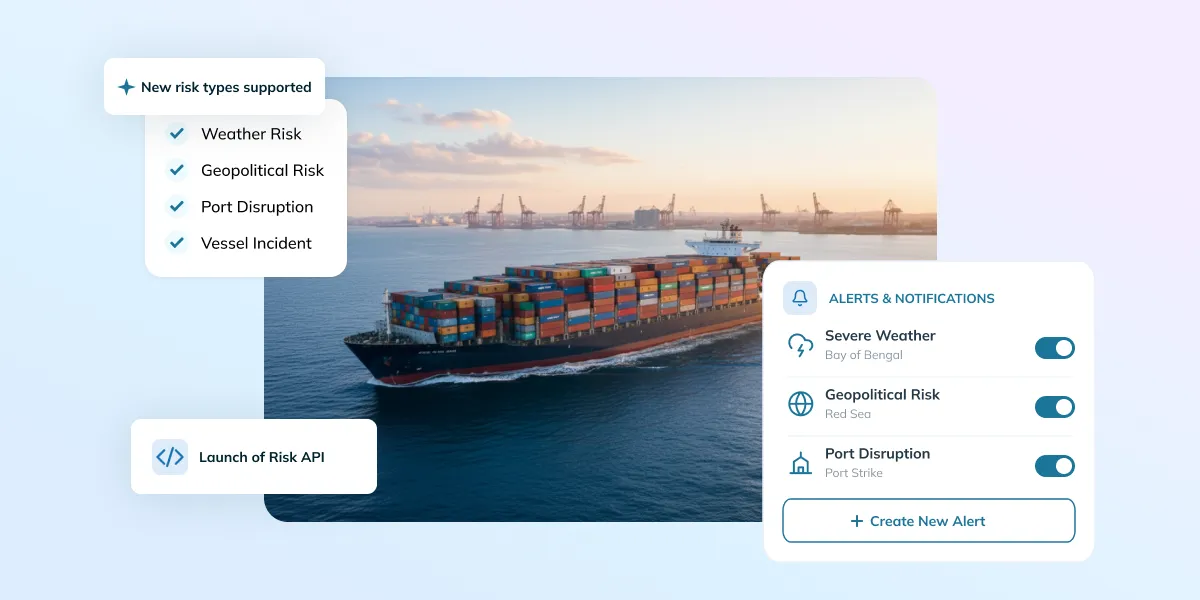
The new features under Risk Intelligence are built on that same layer, now covering more types of risks, also available via a programmatic API, and delivered to you proactively through alerts. Below, we break down what's new.
Track More of the Risks That Affect Your Containers
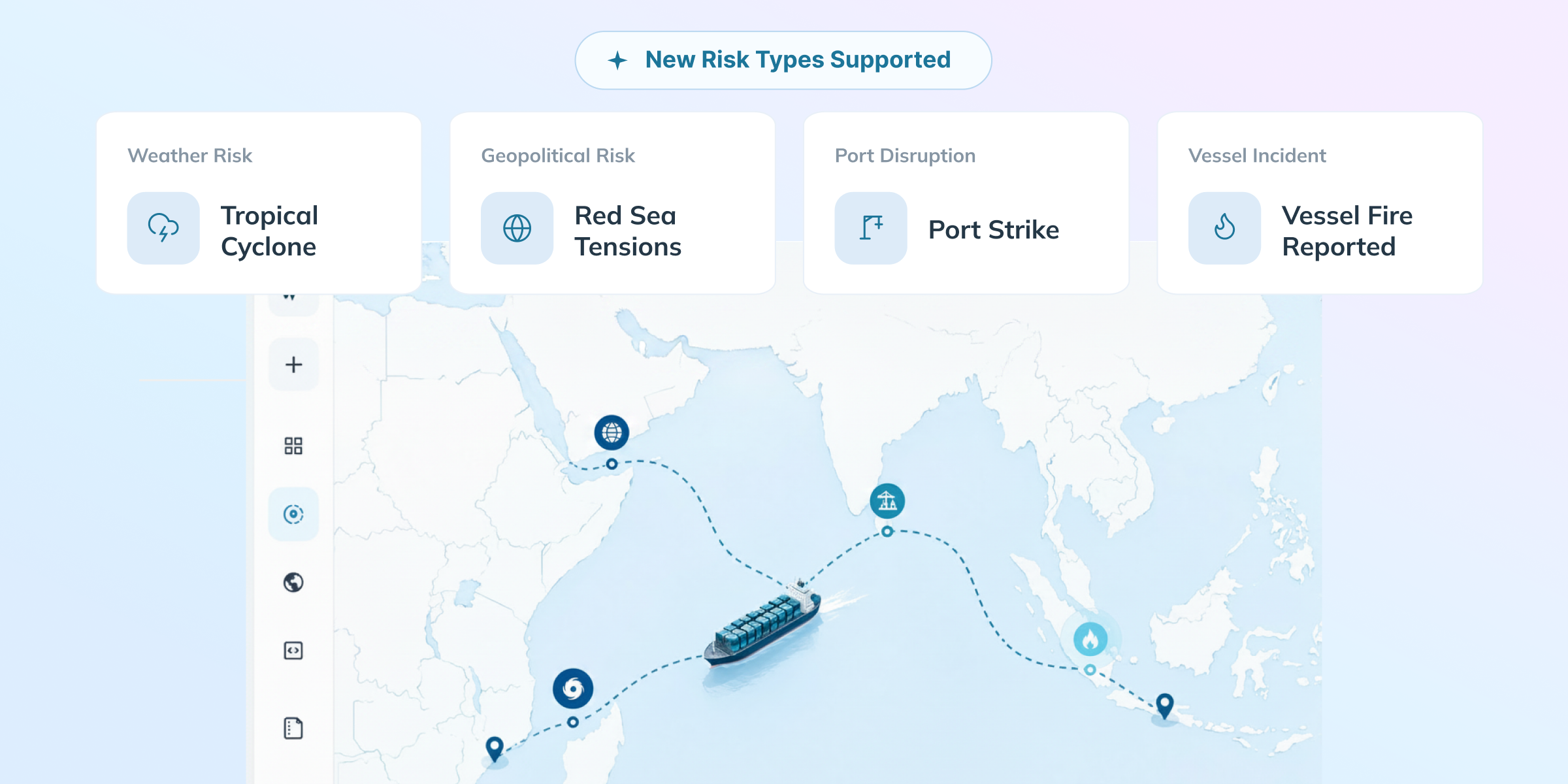
Portcast's Command Center has always surfaced risks like delays and idle time. We have now expanded the risk layer to cover the external disruptions that sit behind so many of those delays: cyclones and other weather-related disruptions, geopolitical events, and vessel accidents. Rather than scanning global headlines and guessing at your exposure, you see only the events that actually affect your cargo.
Each event is mapped to the specific containers it affects, from the port to the vessel to the container. Portcast pulls in carrier advisories, news, weather, and disruption sources, and uses AI models to identify which ports, vessels, and routes are affected, and which of your containers are in the path. When a risk is resolved, it is automatically dissociated from the container, so your view always reflects what is actionable today.
Because these signals are often captured earlier than the carrier updates the container's ETA, you can act early. If a transshipment port is likely to add a 15-day delay due to congestion, you can identify it and present evidence to your carrier to request an alternative service before the delay is locked in. The result is a clear, current picture of real exposure, and the chance to prevent delays rather than just explain them.
Access Risk Through the Container Risks API
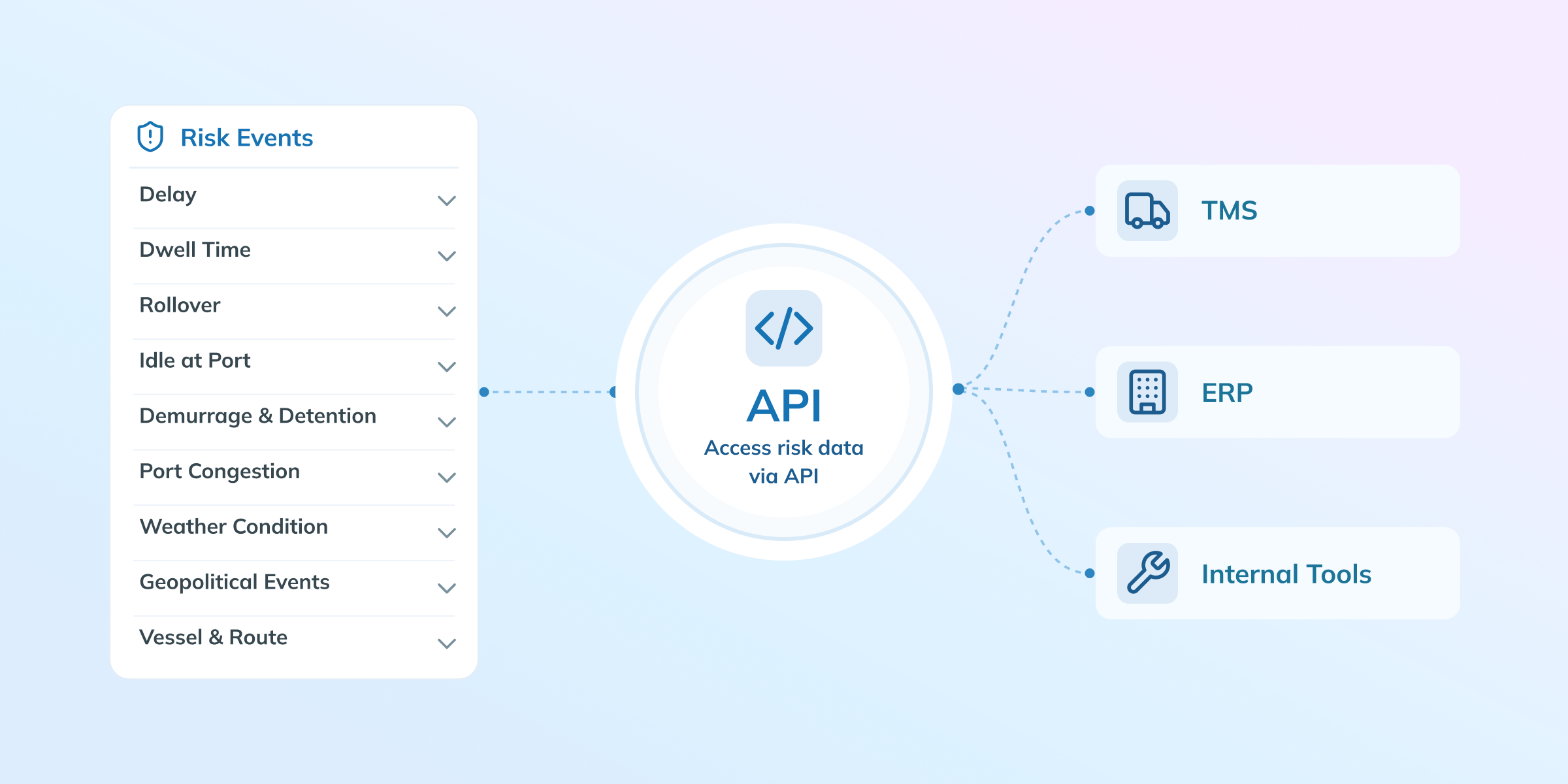
A brand new way of consuming risks to container shipments is the new Container Risks API. This programmatic interface allows risk data to fit into the workflows and systems your team already uses. You can ingest live, container-level risk directly into your own systems, whether that is a TMS, an internal ERP, or a customer-facing platform, without depending on the Portcast UI.
This puts the logic in your hands. You define the thresholds that matter to your business, whether that is a five-day delay, a ten-day delay, rollovers only, or any rule specific to your operation, and build your own workflows around live risk. The same risk events that appear in Command Center are available through the API, ready to plug into those workflows.
For teams that embed visibility into their own tools, this means risk fits how you already work, rather than forcing you to another screen to check.
Get Risk Delivered Proactively
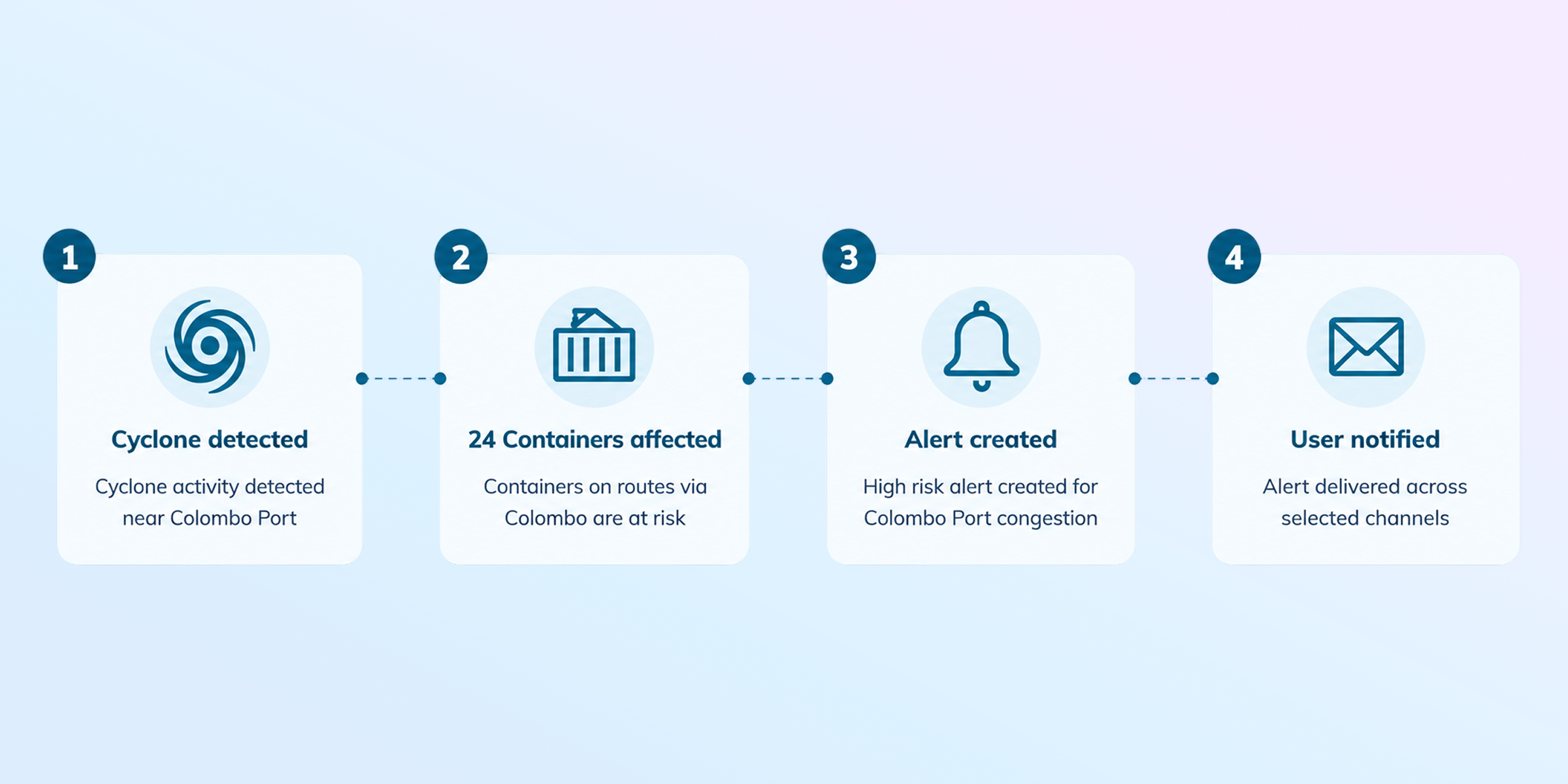
Another major update to Risk Intelligence is proactive alerts. You can now create alerts directly in Portcast based on the same risk conditions available in Command Center, including newly added risks such as geopolitical events and weather disruptions, as well as your own filter criteria. Every time a container matches those conditions, you're notified automatically.
You control the frequency, so alerts arrive at a pace that suits your team's focus instead of adding to alert fatigue. Multiple delivery methods let you plug this into the platforms and channels your team already uses. Plus, team members can be added to the alerts, so no risk goes untreated.
What This Means for Your Team
Together, these updates give your team a more complete view of risk: more visibility into external disruptions affecting your containers, a Container Risks API to bring that risk into your own systems, and proactive alerts that surface what's changed so you don't have to check. The thread running through all of it is acting earlier, before a risk becomes a delay and a delay becomes a cost.
It's another step toward our broader vision of a proactive, eventually touchless supply chain, where the platform tells you what matters and what to do next, rather than asking you to find it yourself. Risk visibility builds on core visibility and ties into your contract and cost data, so you see not just what's happening, but what it will cost you and how to get ahead of it.
If getting ahead of disruptions and acting before delays become costs is a priority for your team, you can request a demo to see how Risk Intelligence works for your shipments.


![[ロゴ]](https://cdn.prod.website-files.com/643006af9e6f61169be0dfb1/643006af9e6f611743e0dfee_Logo-Black-big.svg)
