%201.svg)
What is the current port congestion at major global ports?
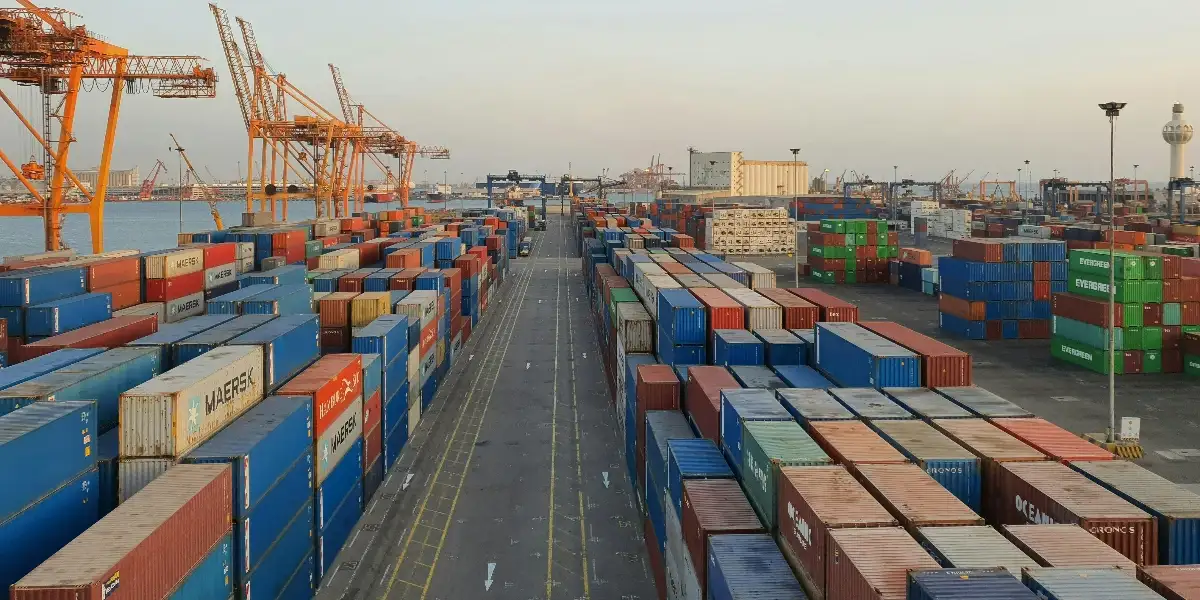
Port congestion can shift quickly, impacting schedules, container dwell times, and customer commitments.
To make congestion insights more actionable, Portcast's weekly snapshot (updated every Monday) focuses on a curated set of ports showing high and medium congestion, and ports experiencing long-tail congestion delays.
Instead of scanning long tables, logistics teams can quickly see where delays are most likely to impact planning.
How is port congestion calculated?
Portcast tracks congestion using real-time AIS signals, port call schedules, and predictive analytics. We calculate multiple congestion indices to give you a full picture:
Live port congestion data for the week: Sep 27- Oct 3, 2026
The table below shows the latest congestion metrics for global ports, grouped by congestion category from High to Medium to Low. Within each category, ports are ordered by median waiting time, from highest to lowest.
The three congestion bands in the table:
High congestion ports: Ports experiencing sustained vessel queues and extended wait times. These locations are seeing the highest risk of schedule slippage and downstream dwell time impacts.
Medium congestion ports: Ports with moderate congestion where delays are emerging but not yet systemic.
Long-tail congestion ports: Ports that may not appear severely congested at first glance but show long-tail delays. A smaller number of vessels face disproportionately long waits, creating hidden risk for specific shipments.
This weekly update highlights ports that matter most right now, based on congestion severity. But Portcast customers get far more: They get real-time insights into terminal-level congestion, long-tail delays, and dynamic ETAs that adapt to changing port conditions. Instead of reacting to disruptions, they plan proactively, with one platform that flags issues early and helps teams stay ahead.
See how port congestion affects your containers
Port congestion data is most powerful when it’s connected to your actual shipments. Our customers use Portcast to turn port congestion insights into proactive decisions that improve on-time delivery and reduce costs.
- Get real-time visibility into congestion across 600+ seaports
- Monitor vessel waiting times and traffic to manage disruptions
- Plan effective shipping routes using updated weekly data
Check our live tracker or API.
Want to learn more? Contact us.
Frequently Asked Questions
1. Why does a port show low congestion even though vessels are waiting?
This can happen when delays affect only a small number of vessels, a pattern known as long tail congestion. For example, most ships may move through quickly, but a few face extended waits due to berth bunching, yard handling bottlenecks, or customs clearance. These isolated delays don't raise the overall congestion level but can still cause significant supply chain disruption.
2. What does it mean when congestion is ‘high’ but wait times look normal?
This usually signals operational unpredictability. Some vessels may move fast, while others get stuck in long delays. We calculate not just median times but also P75 and P90 percentiles — these capture long-tail delays that disrupt planning.
3. What causes ‘long tail congestion’?
Long tail congestion occurs when a minority of vessels experience delays far beyond the average. Causes include berth bunching, high yard utilisation, equipment failures, adverse weather, or ripple effects from blank sailings. Even if most vessels move smoothly, these outliers can disrupt schedules and downstream operations.
4. Why do some vessels skip anchorage but still get delayed?
In ports like Shanghai or Singapore, vessels may be held offshore instead of queuing at anchorage, or they may face longer terminal processing after docking. So, skipping anchorage doesn’t always mean faster turnaround.
5. How is ‘vessel waiting time’ calculated at Portcast?
We calculate it from the moment a vessel reaches anchorage until it is successfully berthed. Our models combine AIS signals, live port calls, and historical trends to detect waiting — even when port status updates are delayed or unavailable.
6. Can vessel traffic be high even if congestion is low?
Yes. High traffic means a port is busy, but it doesn’t always mean it’s delayed. Efficient ports can handle large vessel volumes without long queues. That’s why we track both traffic and actual waiting times.
7. What’s the difference between ‘vessel traffic’ and ‘vessel waiting’?
Vessel waiting refers to ships anchored or drifting while pending berth availability. Vessel berthed means the ship has secured a berth and is undergoing unloading, loading, or other terminal processes. Tracking both provides a clearer view of how quickly a port moves ships from arrival to operational processing.
8. How does Portcast categorize congestion as low, medium, or high?
We benchmark each port using percentile-based thresholds:
- Low: Below median (P50) wait time and consistent flows
- Medium: Delays starting to rise; P75 trending up
- High: Long tail cases; P90 or maximum delays breaching norms
- This helps compare ports fairly across regions and trade lanes.
9. Why is ETA alone not reliable for congestion assessment?
ETAs are often optimistic or rarely updated. They don’t account for live vessel backlog, yard congestion, or real terminal delays. Our predictions use real-time vessel behavior, anchorage time, and processing trends — offering a clearer congestion signal.
10. Why don't carrier ETAs reflect actual port congestion or update in line with real-time congestion conditions?
Carrier ETAs are based on planned schedules and may not account for real-time congestion. Our congestion indices capture actual conditions — from anchorage arrival to terminal dwell — that carriers may not factor into their updates. For example, a vessel might arrive on time but wait two days at the terminal before unloading, which wouldn't be visible in the carrier's ETA.
11. Can I get this data for my own port list or trade routes?
Yes. Portcast’s API and Port Congestion Tracker let you monitor congestion metrics and vessel wait times for major global ports.
You can export it directly from the Port Congestion Tracker or access it via our API for TMS integration and planning your automation.
Want to go deeper with port congestion analytics?
Are you looking for reliable port congestion insights or to automate your workflows using this data?
You can visit our Port Congestion Tracker