All Carrier Sailing Schedules, With Port Congestion Intelligence
Search a multi-carrier sailing schedule across 35+ carriers and 420,000+ port pairs from one platform. Portcast adds port congestion, blank sailing capture, and API access, so your team can plan an ocean freight schedule with more than just a departure date.
Talk to our team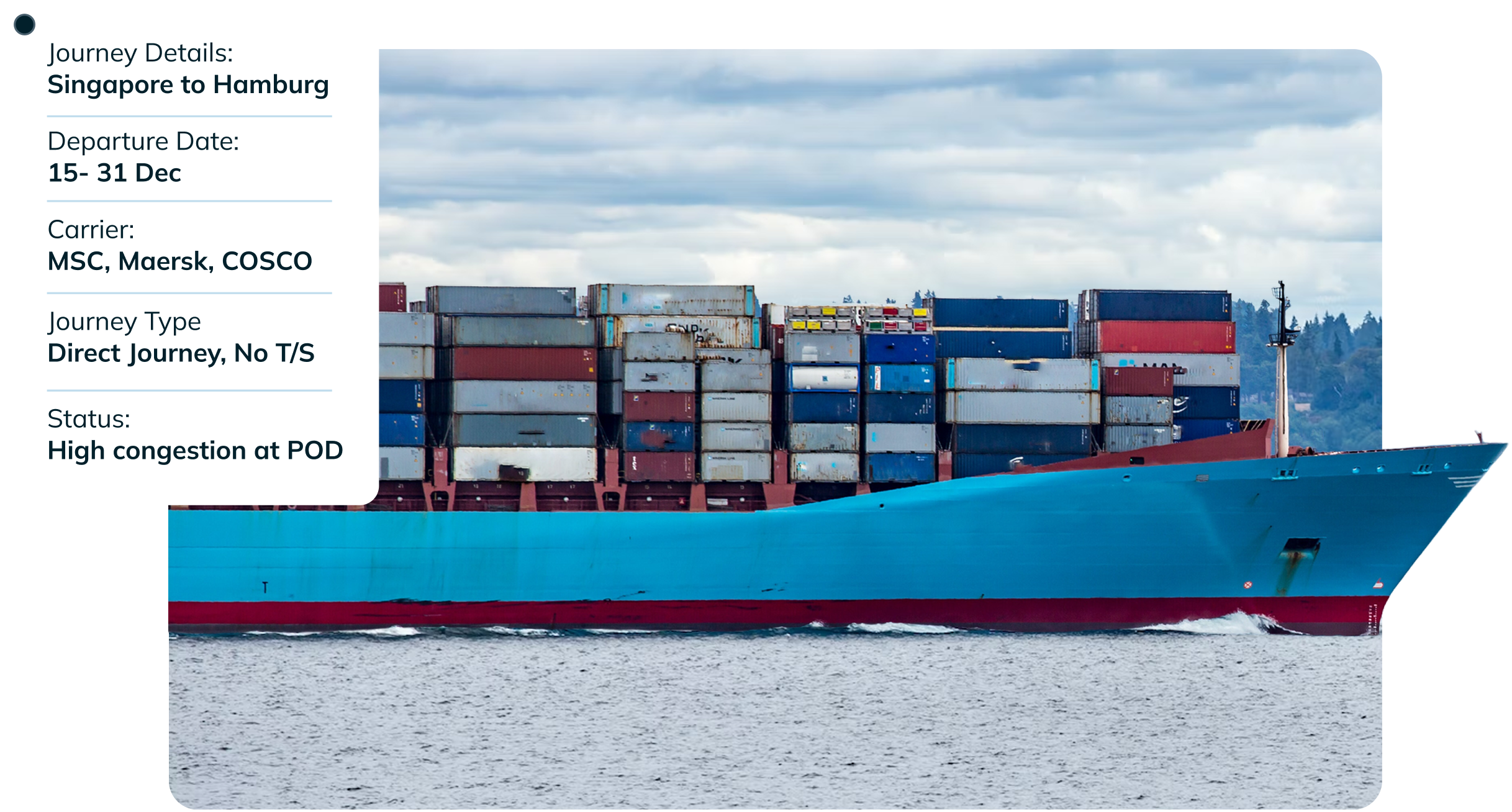
Carrier Tracking Alone Does Not Give You the Full Picture
Planning teams open Maersk.com, then MSC.com, then COSCO and a handful of other carrier sites, copying departure dates into a spreadsheet one lane at a time. Those pages do not show whether the port of loading is congested, and a blank sailing can remove a departure you already planned around.
Scattered Carrier Schedules
Comparing sailings across Maersk, MSC, COSCO, and other carriers means switching between websites and formats, which takes time your team does not have.
Blank Sailings Catch Teams Off Guard
Carrier cancellations arrive late and scattered across advisories. Without a centralized view of blank sailing changes, planning teams find out at the last minute, with little time to rebook or reroute.
Limited Visibility into Port Conditions
A schedule shows departure dates on its own. It does not show whether the destination port is congested, how dwell times are running, or what waiting times look like at the port of loading and the port of discharge.
Key Features of Portcast's Sailing Schedules Solution
From a multi-carrier schedule search to congestion-aware planning, built for teams that need full operational context alongside their sailing data.
Carrier Schedule Search
Search a Ship Sailing Schedule Across 35+ Carriers and 420,000+ Port Pairs in One Place
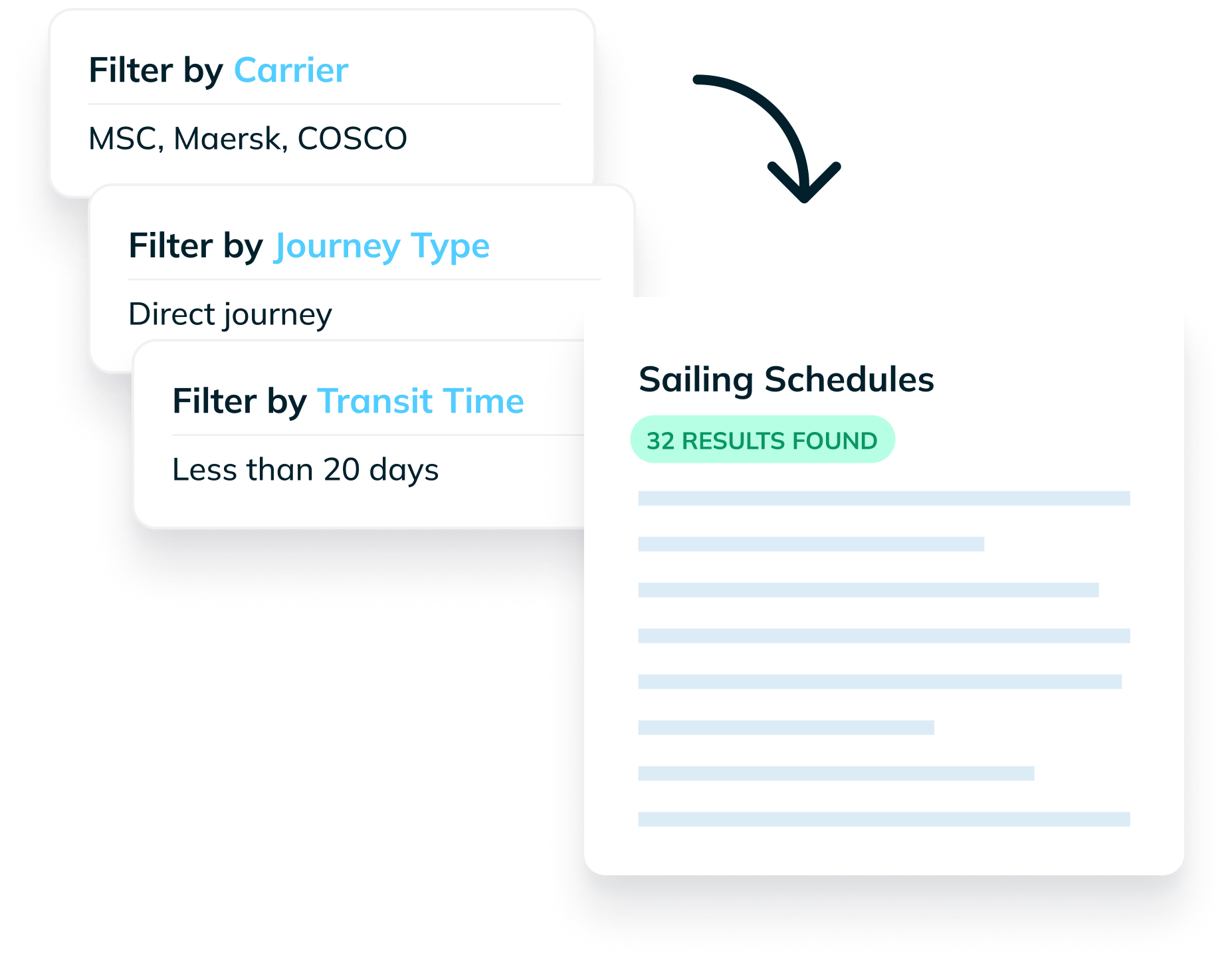
Portcast aggregates frequently refreshed schedules from major carriers including Maersk, MSC, and COSCO, so your team can search, filter, and compare sailings from a single platform.
Access schedules from 35+ major carriers in one unified search.
Filter by port pair, carrier, vessel, and transshipment count (direct, 1, or 2 transshipments).
Compare direct and transshipment routes side by side, and sort by duration, departure date, or arrival date.
Schedules collected directly from carriers and refreshed frequently.
Port Congestion and Risk
Plan Around Operational Risks Alongside Every Schedule
A departure date is one input. Portcast surfaces waiting time, dwell time, and traffic at port for both the port of loading and port of discharge, so your team can factor congestion into each booking decision.
View waiting time and dwell time at both the POL and POD.
Expand a congestion card for detailed metrics, including traffic at port for both ports on your voyage.
Identify sailings with fewer transshipments and lower disruption risk.

How Portcast's Sailing Schedules Work
Three steps from search to plan, with congestion data included at each stage.
.png)
.png)
.png)
What Portcast's Sailing Schedules Solution Delivers
Save Time on Planning
Access frequently refreshed schedules from 35+ carriers and over 420,000 port pairs in one place, so you can run a single search across carriers you would otherwise check one site at a time.
Stay Ahead of Disruptions
Understand port congestion at your key import and export ports, and get an updated view of weeks with no planned sailings across your services and lanes, so you can adjust operations proactively.
Reduce Operational Risks
Plan around waiting time and dwell time at both the port of loading and port of discharge, and favor sailings with fewer transshipments and lower disruption risk.

Sailing Schedules Software: Frequently Asked Questions
Any other question that isn’t mentioned? Don't hesitate to get in touch.
What is sailing schedules software and how does it work?
How does Portcast's sailing schedule data differ from checking each carrier's website?
How accurate is the schedule data, and what is the source?
What congestion data is included and how does it work?
Is there a sailing schedule API for integration into our TMS?
How many carriers do you cover?
Can I download the schedules?
Get Started with Portcast's Sailing Schedules Today

 Get a Demo
