The Company
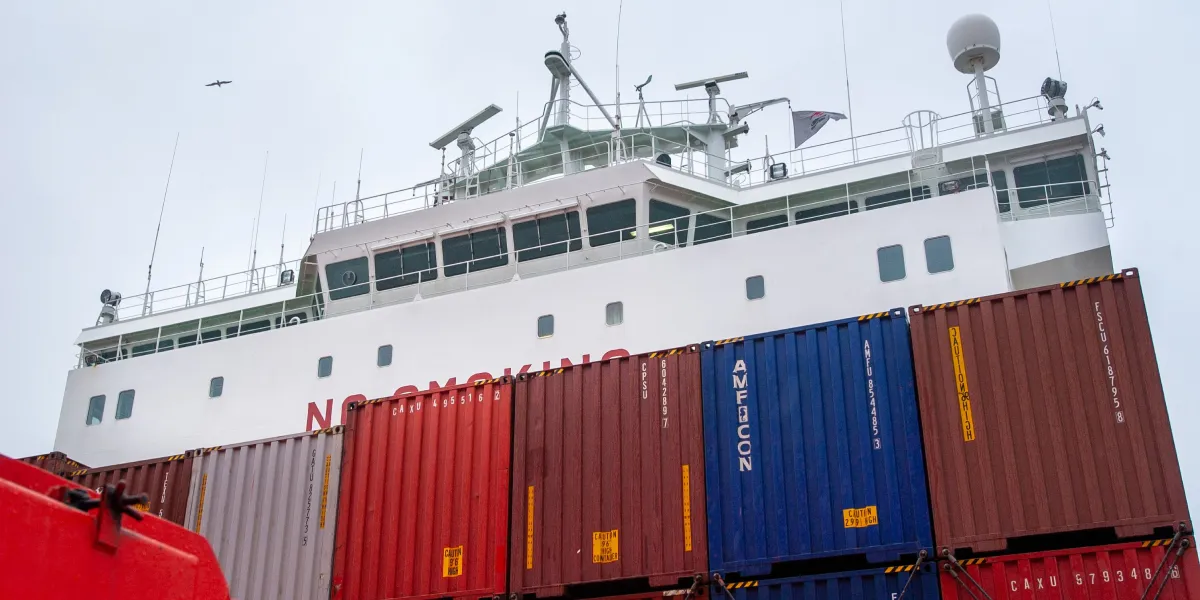
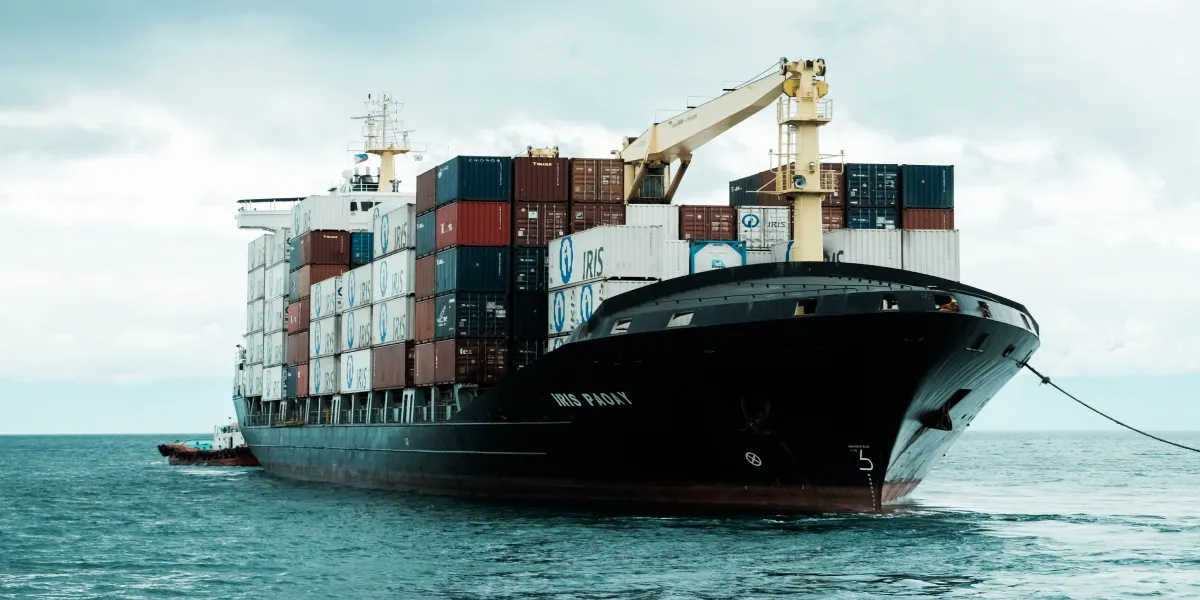
A leading global freight forwarder ships around 150,000 ocean containers a year on 60+ contracted lanes. Carriers used to quote their own reliability at tender, and premium services were sold on schedules that rarely held. Marina, the Market Reliability Agent, now measures reliability for every carrier and every service it runs, 400+ services in all, so the team negotiates, plans and sells on evidence.
The Challenge
Claims at tender time
Carrier performance figures came from the carriers themselves, with no independent check.
Advertised transit times
Lead times followed the published schedule, not what sailings actually delivered.
Premium without proof
Faster services were priced with no evidence they run on time on the lane.
The Solution
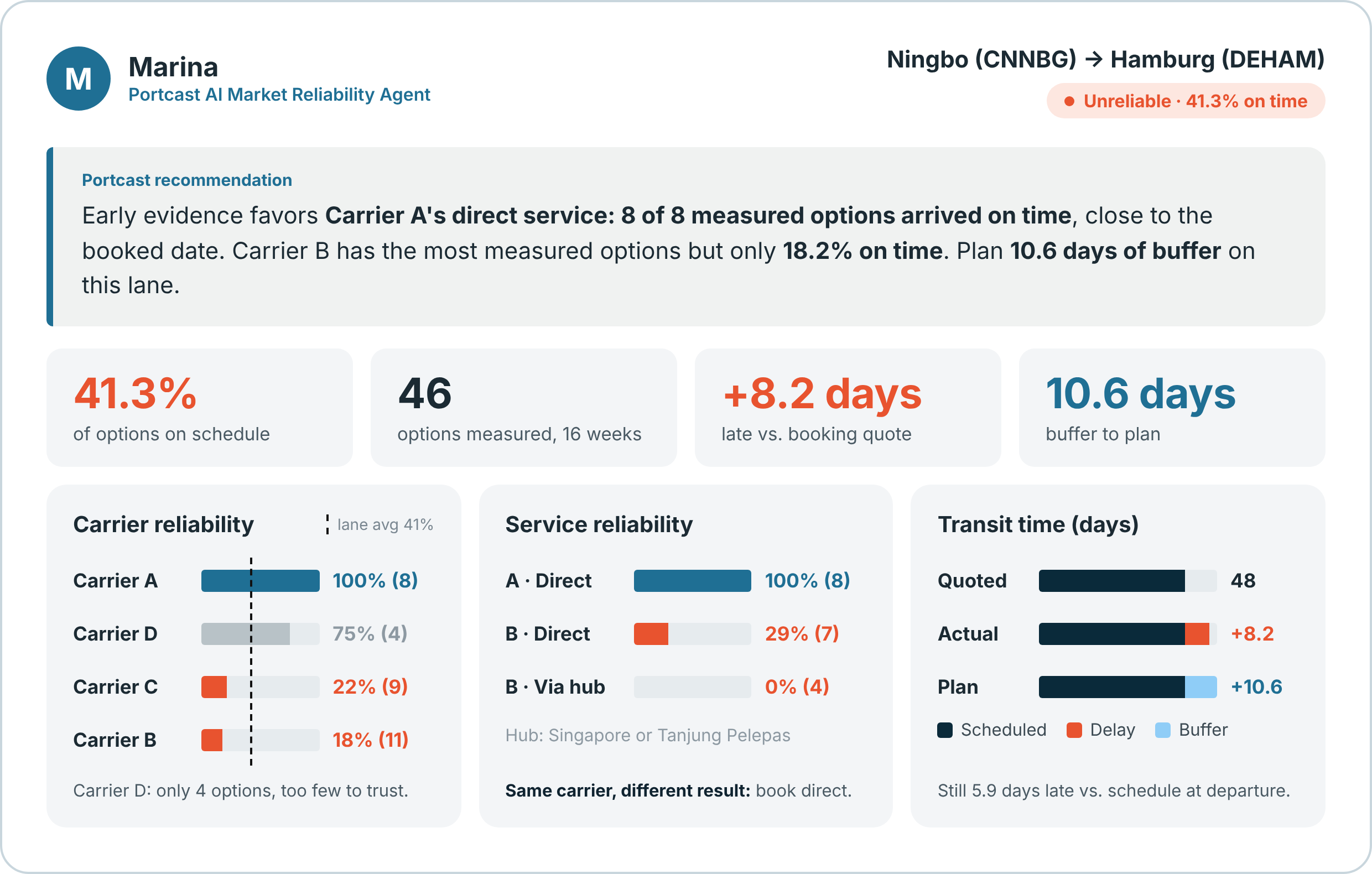
Marina rates reliability at two levels, each carrier and each service it runs, on every lane. It compares announced with actual transit time and explains what it means in plain language. The team decides.
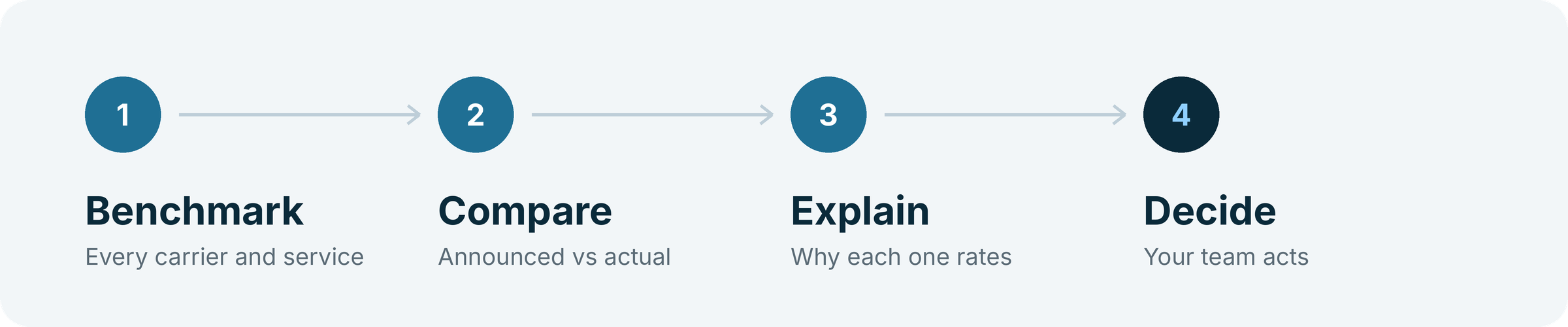
Evidence in the room
Every carrier bidding for a lane is compared with what it actually delivered.
Measured transit time
Lead times use actual transit time, including multi-leg transshipment routes.
Premium on proof
A faster service is checked against its record before it is priced.
Inside a Marina Read
Marina rates each carrier and each service on a lane and recommends how much buffer to plan, shown here for Ningbo to Hamburg.
The Impact
Marina represents ~$587k of estimated value every year, across all lanes, as every tender, lead time and premium price now rests on measured carrier and service performance.
Beyond the Numbers
- Tenders on evidence: Rates and service levels are negotiated from delivered performance, with contracted carriers compared against the lane average.
- Consistent booking choices: Booking desks see how each service has run before they choose.
- Lead times that fit: Marina suggests the buffer to plan, so lead times match what carriers deliver.
- Answers that hold up: Delivery promises and premium offers rest on measured performance.
- Transshipment included: Services that transship are rated on the full route and compared with direct ones across the lane.
- One set of numbers: Procurement, operations and sales work from the same evidence.
Curious how Portcast can cut manual tracking, improve shipment visibility, and reduce costs? Get in touch to explore how.