Your operators shouldn't have to work out which shipments need attention every morning
Darya, the Daily Agent, reviews every shipment overnight and gives each operator one ranked brief: what changed, what needs a decision today, and where risk and D&D are building. The day's priorities are already set when your team logs in.
See it in action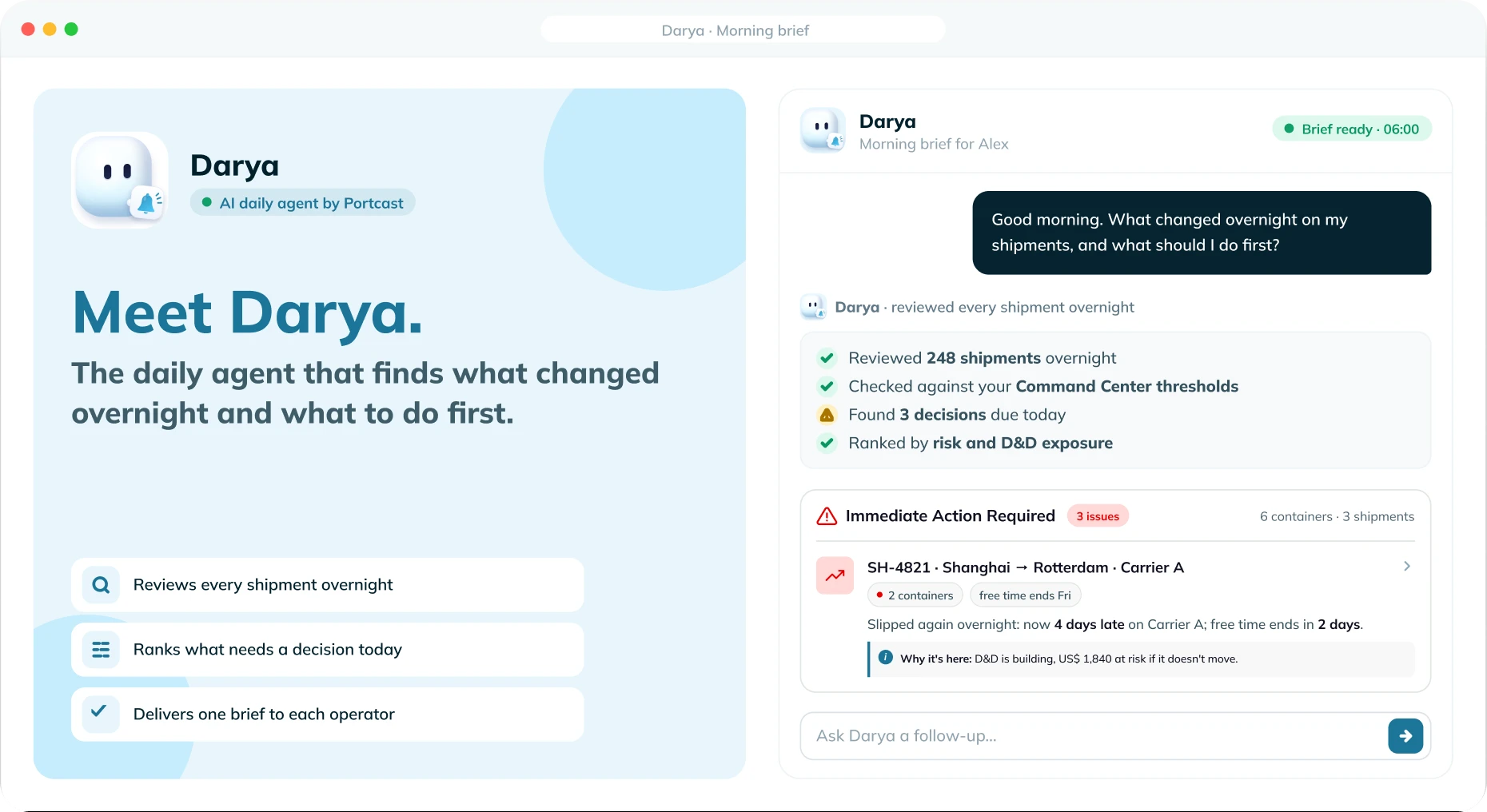
Why does starting the day without a priority list cost you?
Freight exception management often starts the same way. Operators dig overnight changes out of dashboards, emails and spreadsheets before they can act on any of them, and delays, D&D exposure and missed connections tend to surface only after they have become problems. Without a ranked view, priority goes to whoever escalates first, which is often the customer and often late. That is reactive by design, and working proactively starts with knowing what changed before the day begins.

Too many alerts
Standard alerts fire one rule at a time, so a busy day brings a flood of notifications and no view of which one comes first. The result is alert fatigue.

Overnight changes found manually
Delays, route changes and port disruptions that happened while the team was offline are rebuilt manually every morning.

D&D found too late
Containers past free time are often spotted only after charges have already begun.
What is Darya, the Portcast Daily Agent?
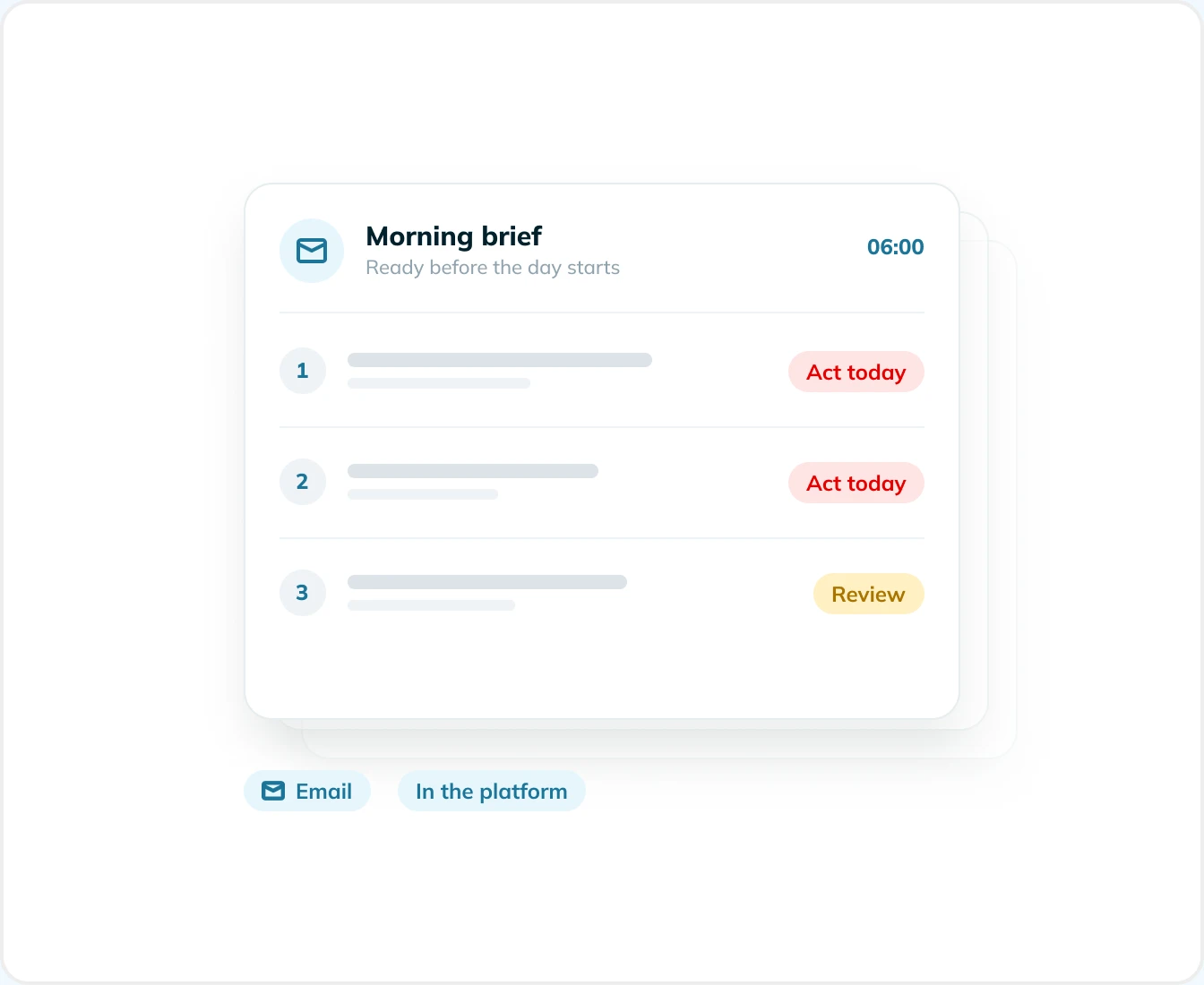
Darya is Portcast’s Daily Agent, an AI agent for logistics operations. It reviews every shipment overnight and hands each operator one ranked brief before the day starts. The brief shows what changed since yesterday, what needs a decision today and where risk is building, with the reason behind each item and a suggested next step. Your team stays above the loop: the agent reviews and recommends, and your people decide.

Priorities set by your rules
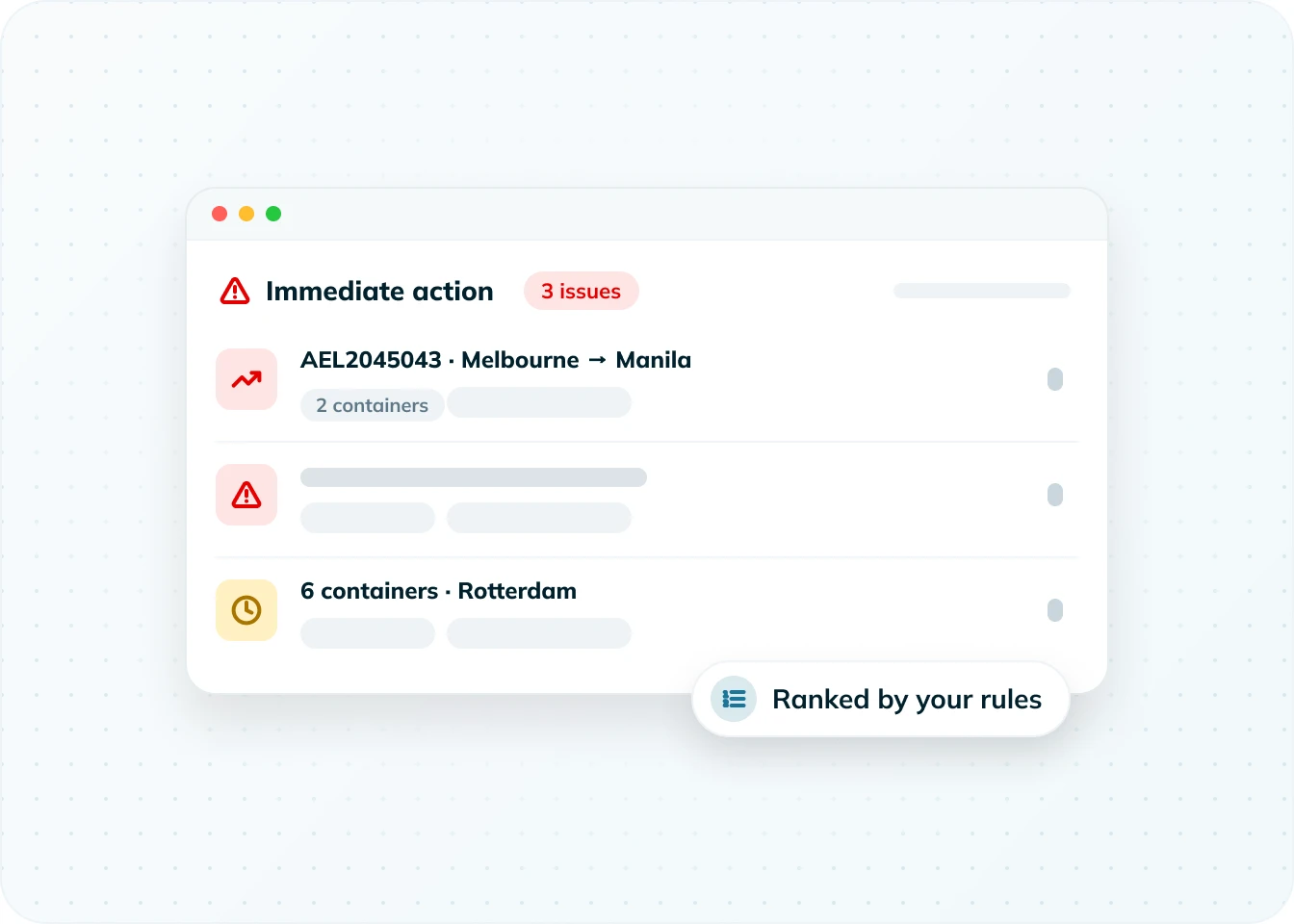
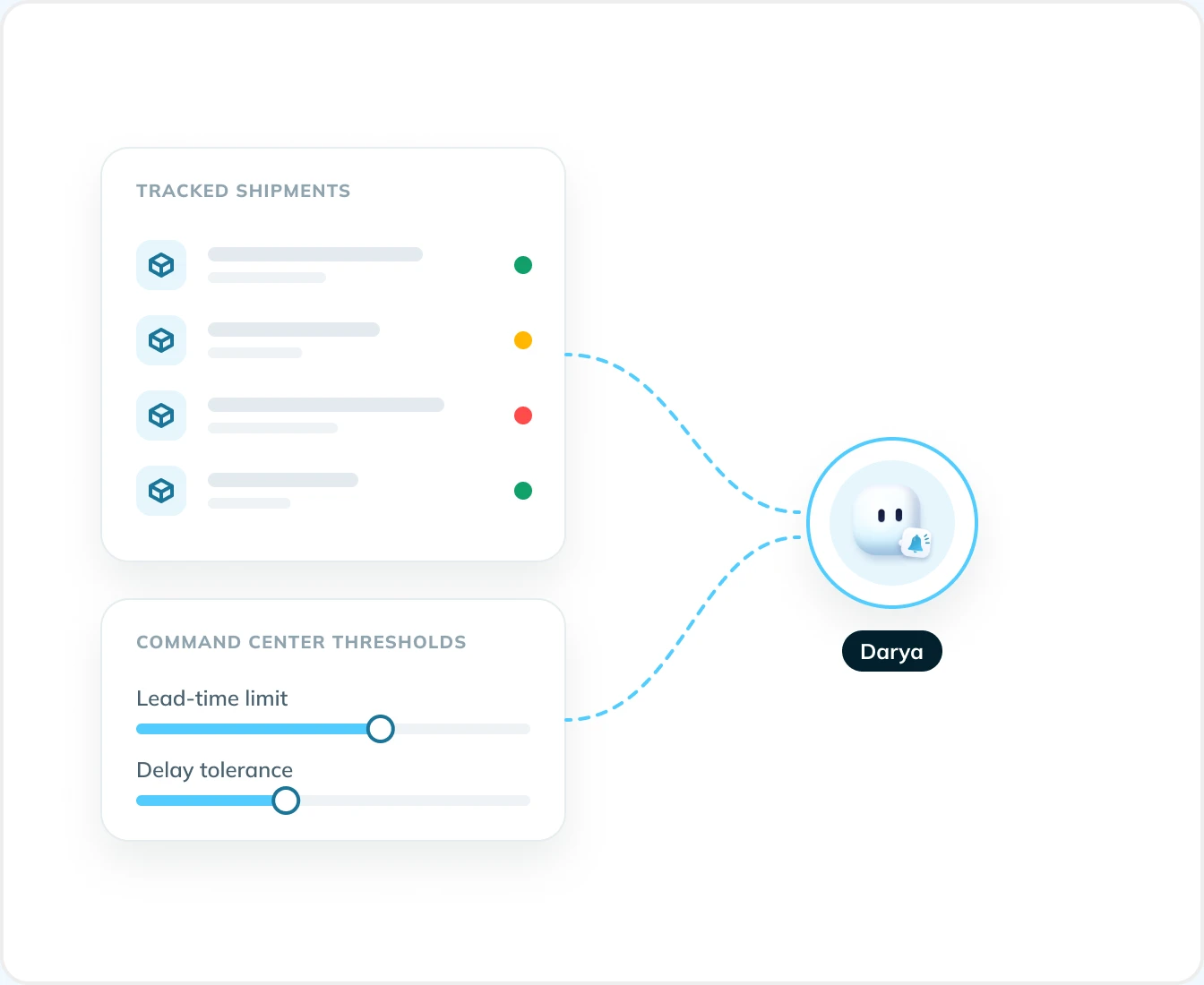
The agent ranks shipments against the thresholds you set in the Command Center, such as lead-time limits and delay tolerance against contract, so the brief reflects how your business weighs risk.
Overnight changes first
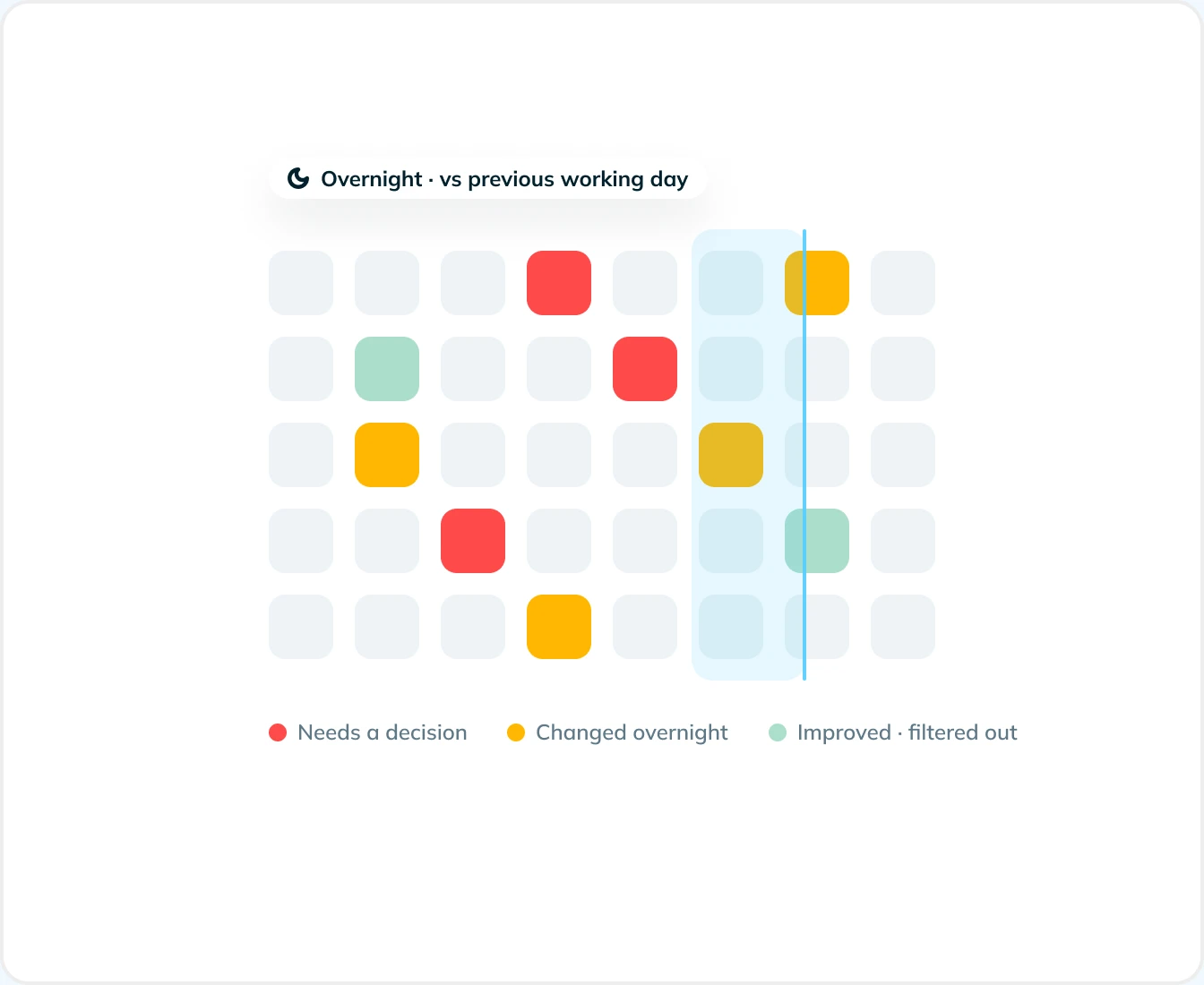
Items that are new since the previous working day lead the brief. Improvements are suppressed, for example, a rollover flag on a container whose ETA actually got better.

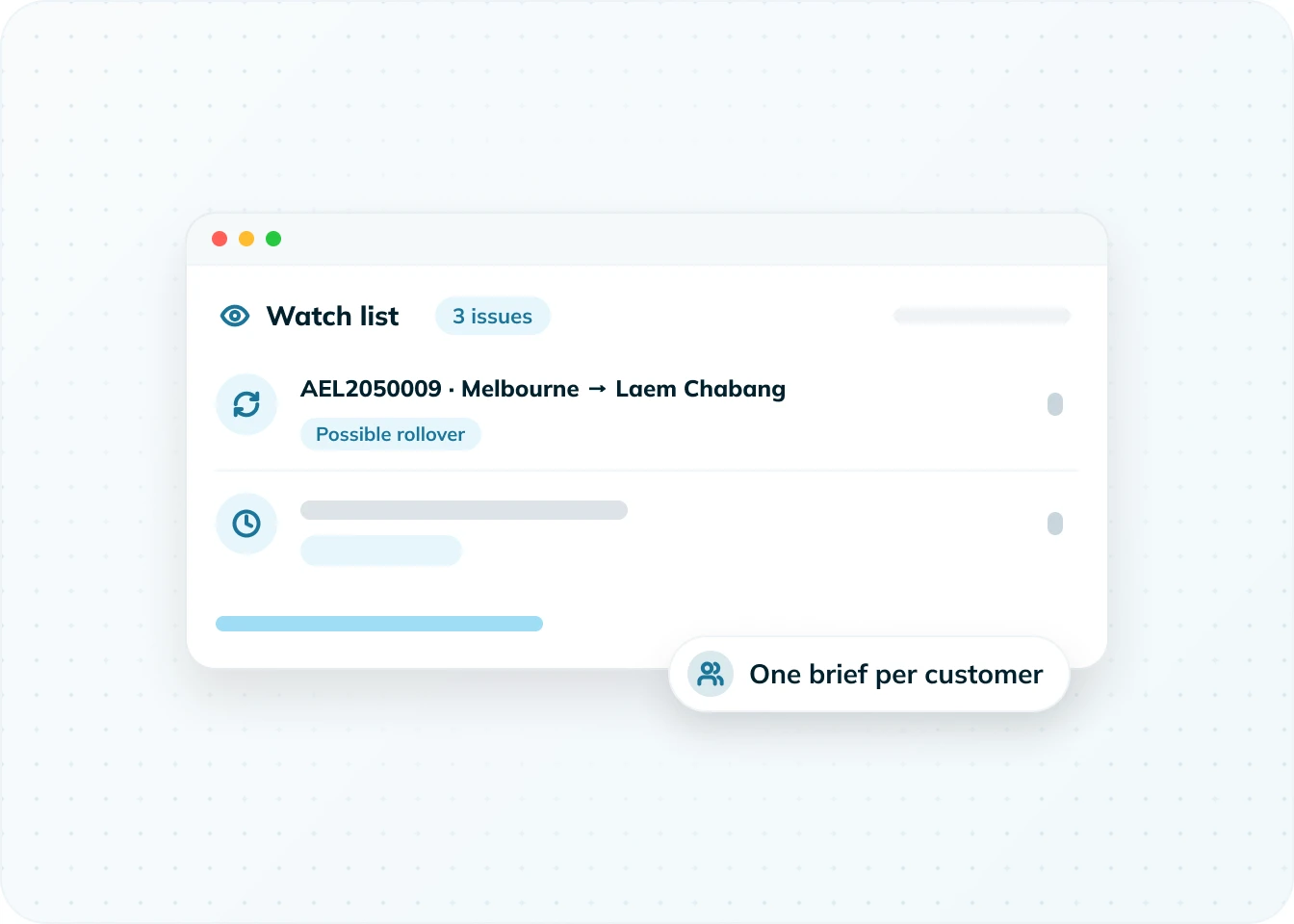
One brief per operator
Each operator receives a brief scoped to the shipments they own. Every shipment is reviewed every night, so nothing depends on someone remembering to check it.
What does Darya, the Daily Agent, do every morning?
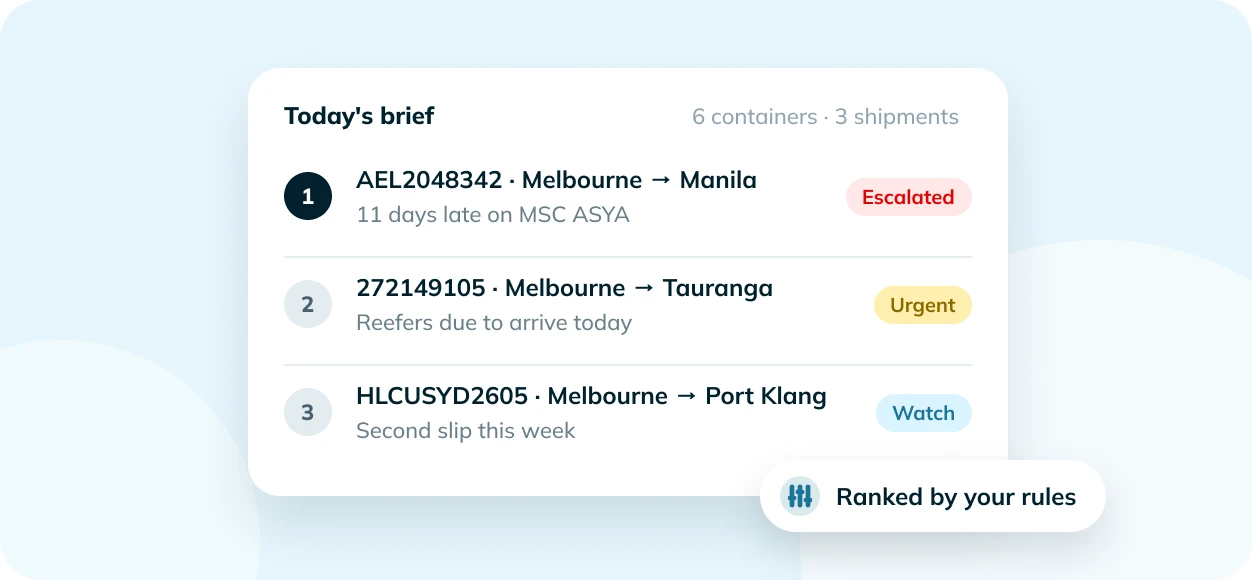
Ranks a large portfolio
Every active shipment is scored against your rules and ordered from the most urgent down: escalations first, then urgency, then business impact, including cost impact and customer SLAs.
Prioritization follows the priorities your business has stated, instead of individual judgment under time pressure.
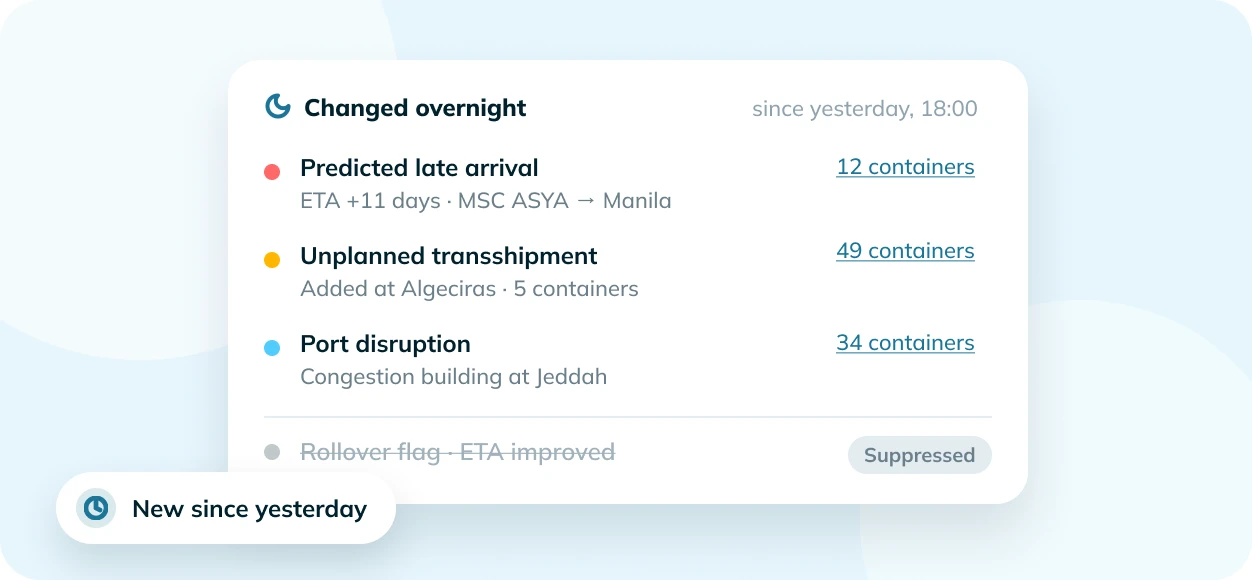
Detects what changed overnight
The agent surfaces predicted late arrivals, ETD slips at origin, unplanned transshipments, containers idling at transshipment ports, destination changes and port disruptions. Rollover flags on containers whose ETA improved are suppressed, which keeps the brief focused on rolled containers that need attention.
The morning meeting works from data instead of memory, and handovers become reliable.
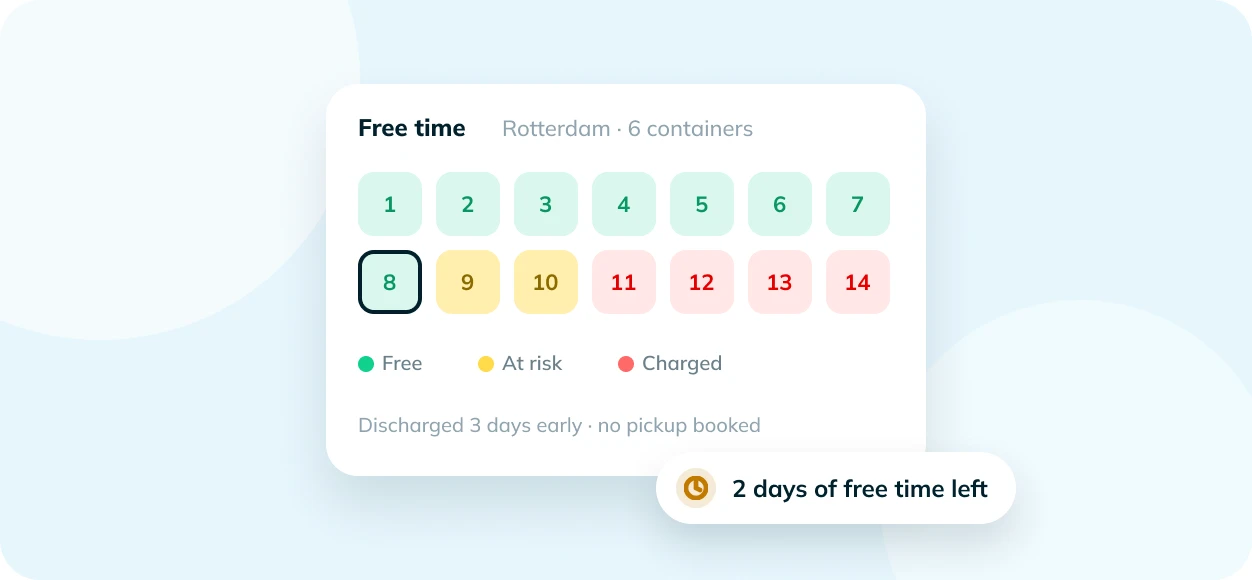
Flags free time expiring and D&D
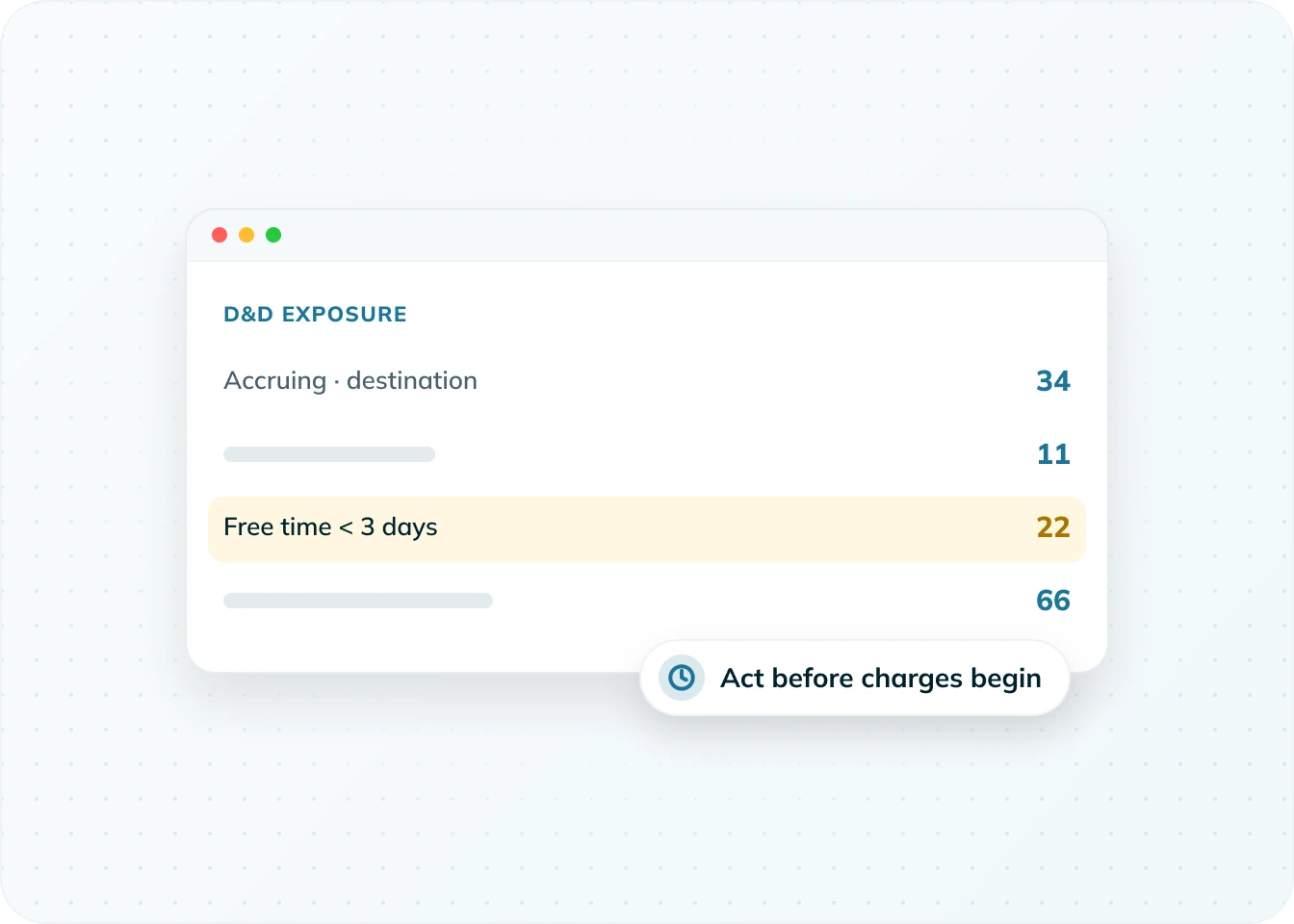
Containers with free time expiring, and those already incurring charges, appear in the ranked list with the reason and a suggested next step, such as booking a haulier pickup or requesting a free-time extension.
Acting while free time remains is the difference between avoiding a charge and absorbing it.
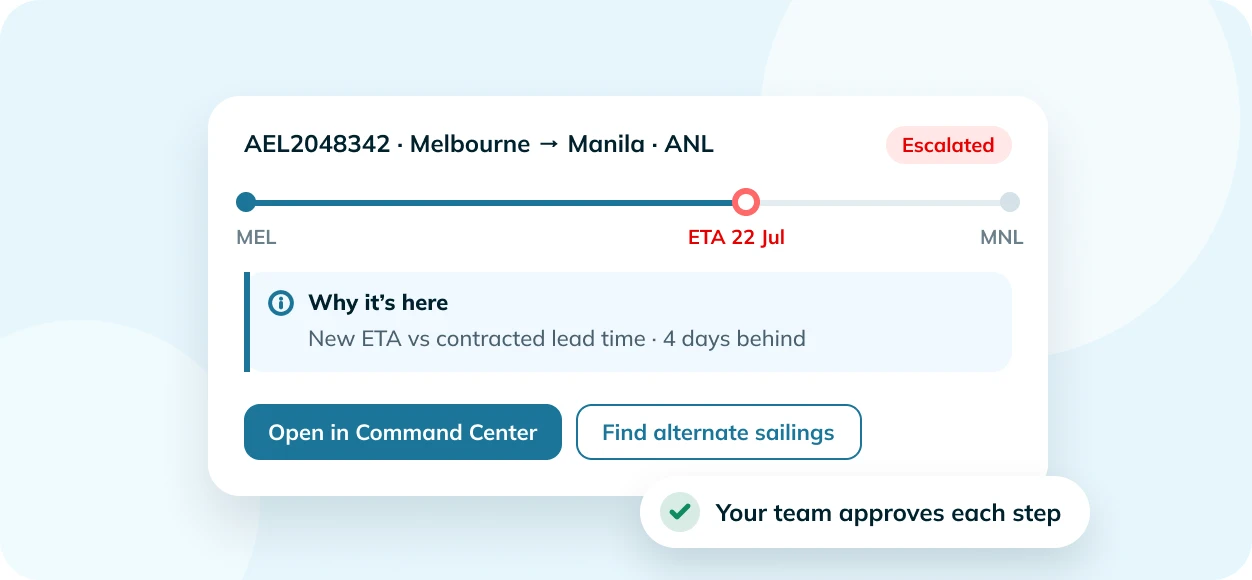
Explains each flag and points to the next step
Every item shows its trigger, such as the new ETA against the contracted lead time and the days behind, and opens in the Command Center and container tracking. When a disruption calls for rerouting, Darya flags the risk and Reef, the Routing Agent, can propose alternate sailings. Your team approves each step.
Operators go from flag to decision in one place.
How do operations teams use the Daily Agent?
Every item in the brief is clickable. It opens straight into the Command Center, on the card and thresholds you set up, and into container tracking, so your team moves from the daily update to the detail and takes action without searching.
Prioritizing a large portfolio each morning
An operator starts the day with hundreds of active containers and no clear way to tell which ones need attention first. They scan emails, carrier portals and dashboards, and rely on memory for which customers or lanes are sensitive.
The operator opens one ranked brief. Items needing action today sit at the top, with the reason: a delay that moved past the contracted lead time, an unplanned transshipment, or free time about to expire. Each item opens in the Command Center, so the operator goes from the brief to the detail and acts.

Faster exception handling, fewer missed escalations and consistent coverage across the team.
Acting on free time before D&D starts
Containers that have passed free time are spotted only after charges begin. Forwarders carry this exposure on behalf of their customers, so charges that start before anyone acts cut into margin.
A brief item reads “6 containers sitting at Rotterdam, 2 days of free time left.” It explains that the containers were discharged 3 days early against the carrier ETA with no pickup booked yet, and suggests booking a haulier pickup today or requesting a free-time extension from the carrier. D&D costs are visible in the Command Center where available.
The team acts while free time remains, and avoidable D&D charges are prevented.
Responding to a market disruption
The team learns about a typhoon, strike or port closure from carrier notices or the news, then works out manually which containers and bookings are affected.
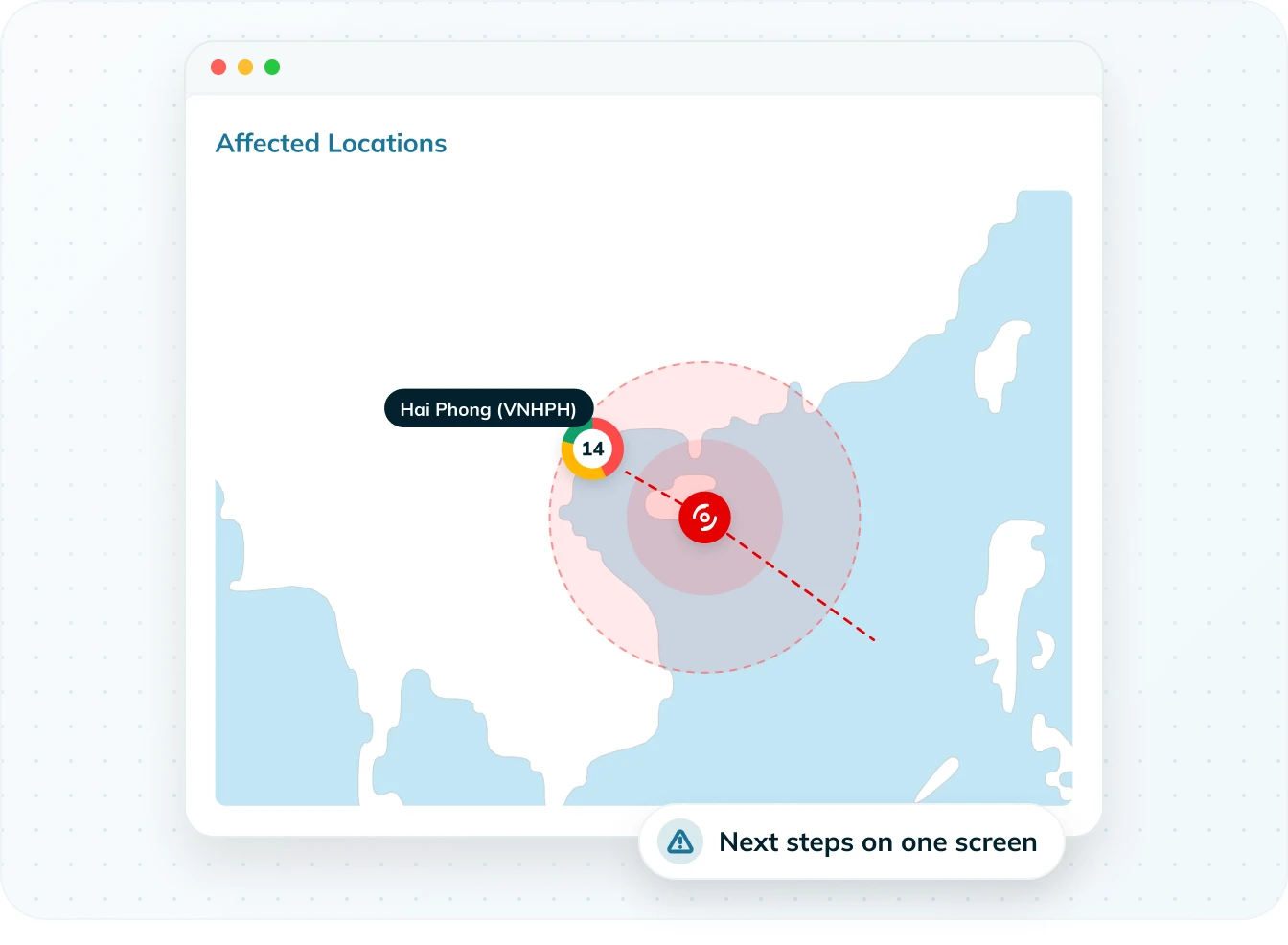
The brief item for a typhoon at Hai Phong opens in the Command Center with a map of the port and the 14 matching containers across 3 bookings, each with its status and predicted ETA. The options shown are to notify consignees, ask the carrier for the next sailing, or find alternate sailings with Reef, the Routing Agent.
The affected containers and the next steps sit on one screen, and the team approves each step.
Handling exceptions across many customers' shipments
Operators manage shipments for many customers. Rollovers, unplanned transshipments and slipping ETAs often surface when the customer calls.
Operators often manage one specific customer, so each operator's brief covers that customer's shipments and leads with what changed overnight, ranked by rules set to match the service levels the business runs to. For forwarders, this works as a daily report per customer. Each item includes evidence, such as the new ETA vs. the contracted lead time and days behind, and opens in the Command Center, so the operator can update the customer and raise the issue with the carrier early.
Fewer surprises for customers and escalations raised on evidence.
How does Darya, the Daily Agent, work?



What does Darya
save in practice?
A global food manufacturer uses Darya, the Daily Agent, across 30,000+ containers a year and a team of 50 operators.
in D&D charges avoided each year, with about 1,500 containers flagged in time.
of morning review per operator, an estimated 80% faster start to the day.
in labor value reclaimed each year, which is 152 hours back per operator.
Labor is valued at a $25 blended hourly cost over 260 working days. Earlier disruption planning and stronger carrier escalations add further upside.
What our customers say




Portcast's daily briefs have been incredibly helpful for our operations team. Within minutes, we can identify which shipments need immediate attention and where cost risks are emerging. What once took hours and still left room for missed risks is now much faster and more effective.
How is Darya different from manual shipment review?
Manual review depends on how quickly someone can find what changed. Darya, the Daily Agent, does that review overnight, using the thresholds your team already sets in the Command Center, and hands each operator one ranked brief.


How do Marina, Reef and Darya, Portcast's AI agents, work together?
Three agents cover the life of a booking. Each one builds on the one before, and your team approves every step.
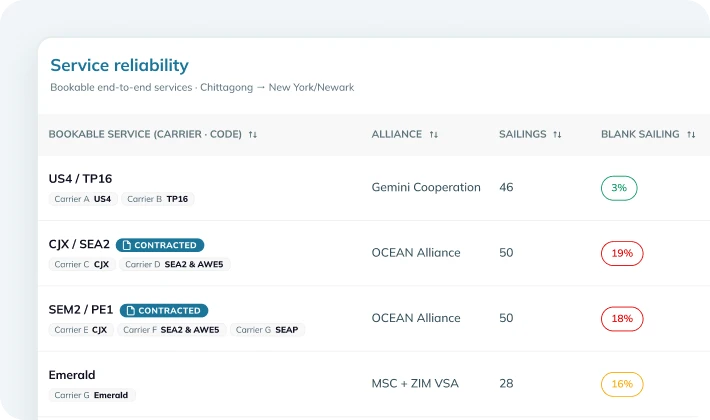
Marina
Benchmarks every carrier and bookable service on your lanes, so tenders, contracts and lead times start from delivered performance.
Explore Marina →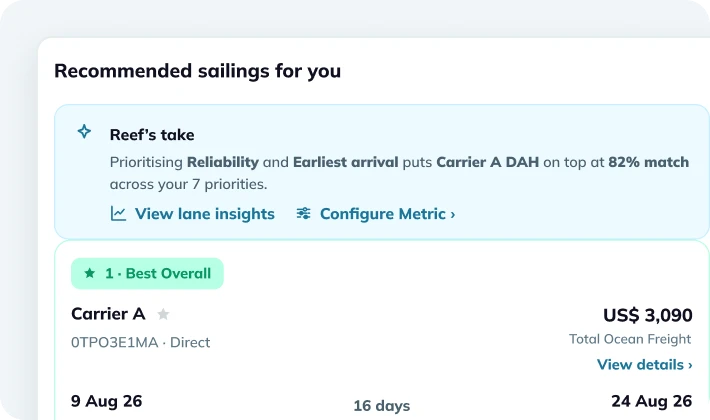
Reef
Ranks live sailings for the booking against your priorities, using carrier reliability data, and recommends the best fit.
Explore Reef →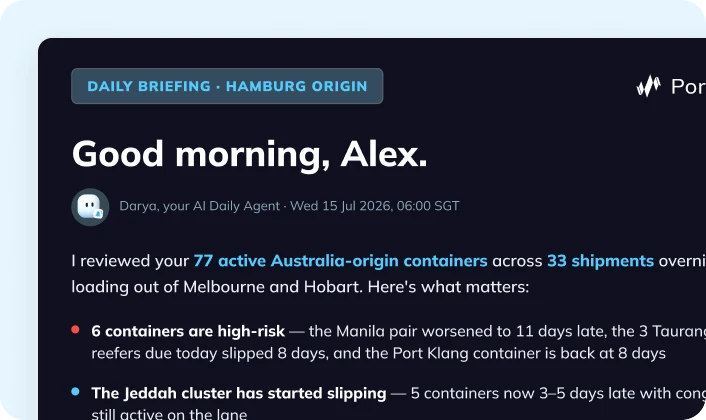
Darya
Reviews every shipment overnight, ranks what needs attention, and flags when a booking needs a different sailing.
What do teams ask most about Darya, the Daily Agent?
Any other question that isn’t mentioned? Don't hesitate to get in touch.
What is Darya, the Portcast Daily Agent?
What should an operator look at first each morning?
How does Darya decide which shipments to rank first?
How is Darya different from exception alerts and daily shipment reports?
Does Darya replace my TMS or tracking system?
What does Darya need in order to work?
How quickly can Darya be set up?
Does Darya take actions on its own?
Does Darya work for both cargo owners and freight forwarders?
Can Darya help reduce demurrage and detention costs?
How does Darya work with Reef, the Routing Agent?

Still spending the start of every day working out what needs attention?

 Book a demo

