Schedule Reliability Benchmarks for Every Carrier and Bookable Service on Your Lane
Marina shows how every carrier and service on your lanes really performs against the schedule it announced when you booked. It also tells you what the numbers mean for your next tender, lead time or booking.
See it in action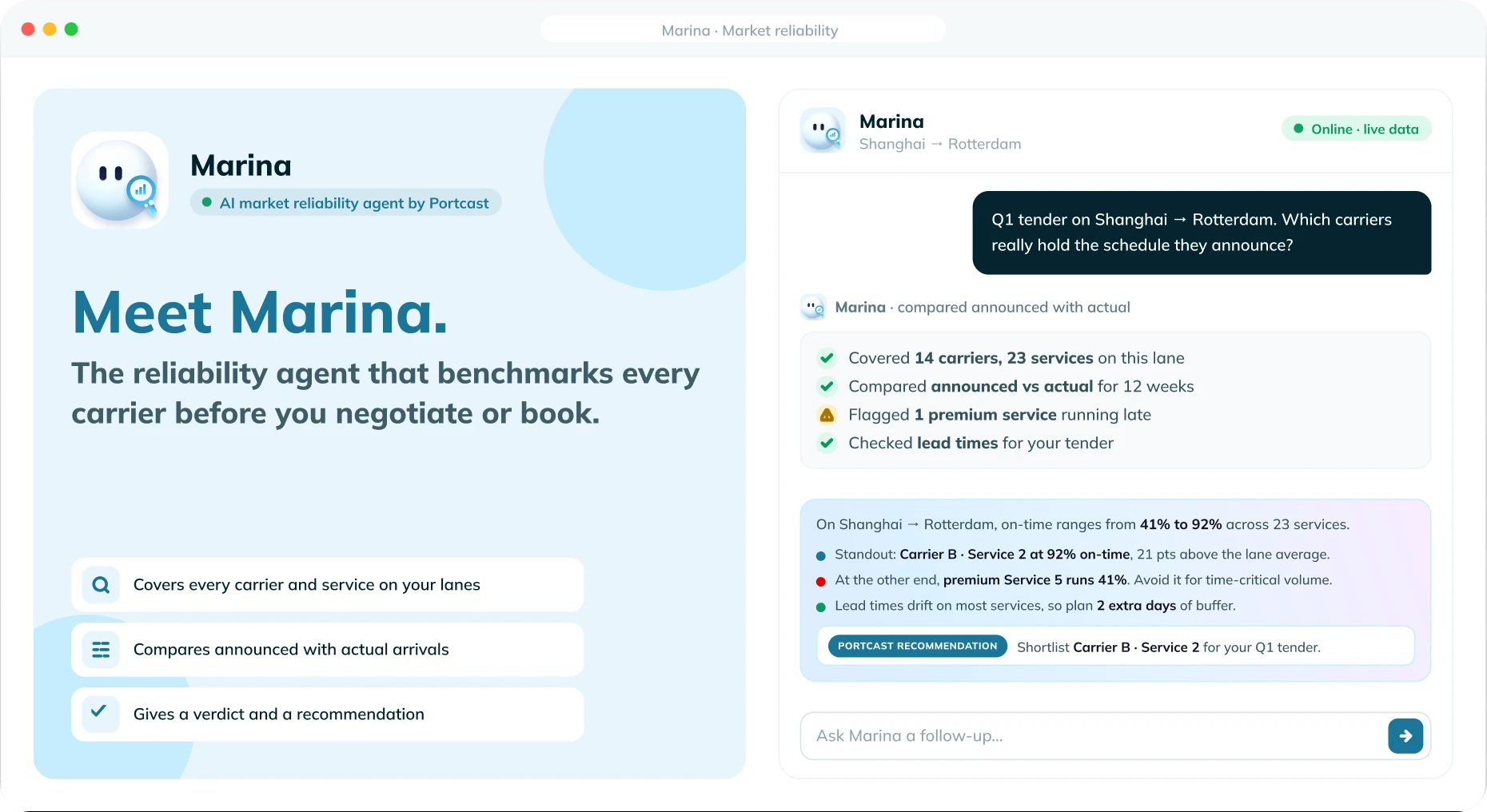
Why doesn't carrier reliability data match the route you actually book?
Most carrier performance data covers a whole trade lane or a carrier overall. It rarely covers the exact port pair and service you book. Carriers also keep changing their schedules after you book.

Averages hide the detail
Most benchmarks cover a trade lane or a carrier overall, so the port pair and service you book get lost.

Indirect routes are missing
Many benchmarks cover direct sailings only. If your cargo transships, nobody checks whether the whole journey ran on time.

The wrong schedule is measured
Carriers revise their schedules after publishing. Proforma-based benchmarks use the original plan, and others use the final ETA, so neither reflects the schedule you booked against.

Your contracts are missing
Market averages describe the whole trade. To judge the services you negotiated, you need to compare them against the lane.

Two teams use different numbers
Procurement negotiates on one set of data and operations books on another. Delays and extra costs show up in the gap.
Better carrier selection starts with schedule reliability measured for the service you book.
What is Marina, the Market Reliability Agent?
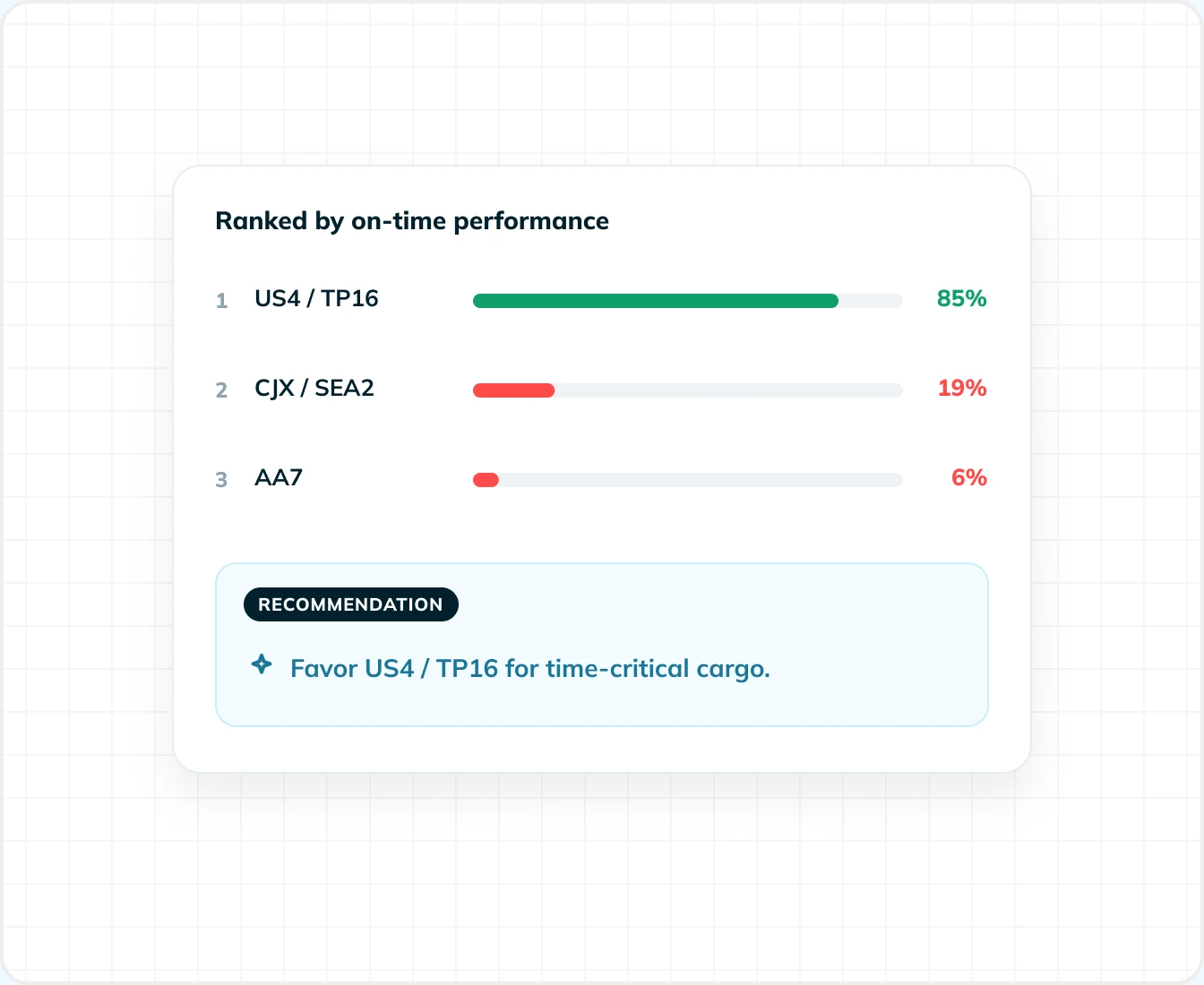
Marina is Portcast's Market Reliability Agent. It gives you schedule reliability benchmarks for every carrier and bookable service on your lanes. A bookable service is the sailing service you can actually buy, with its carrier, service code and alliance. Pick a lane and Marina ranks the services sailing it by on-time performance, using arrivals confirmed by ship tracking (AIS). An agent then writes a short verdict and one recommendation.
Teams use Marina as carrier selection software for tenders and bookings, and as a lane-level benchmark for planning. It puts ocean freight procurement and operations on the same data. The agent recommends and your team decides.
Scores the service you book
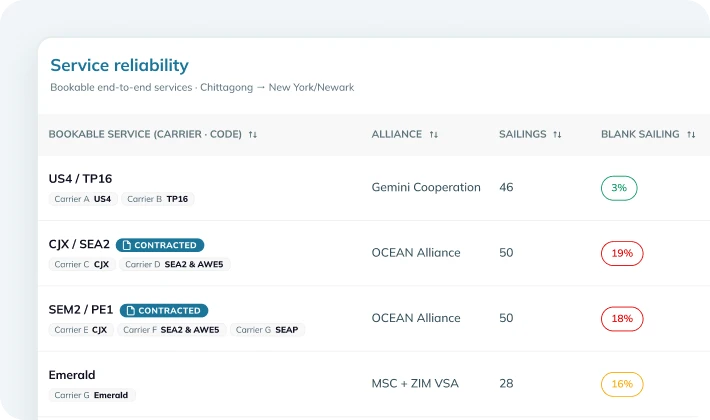
Each bookable service is rated with its carrier, service code and alliance.
Measures against the schedule live at booking
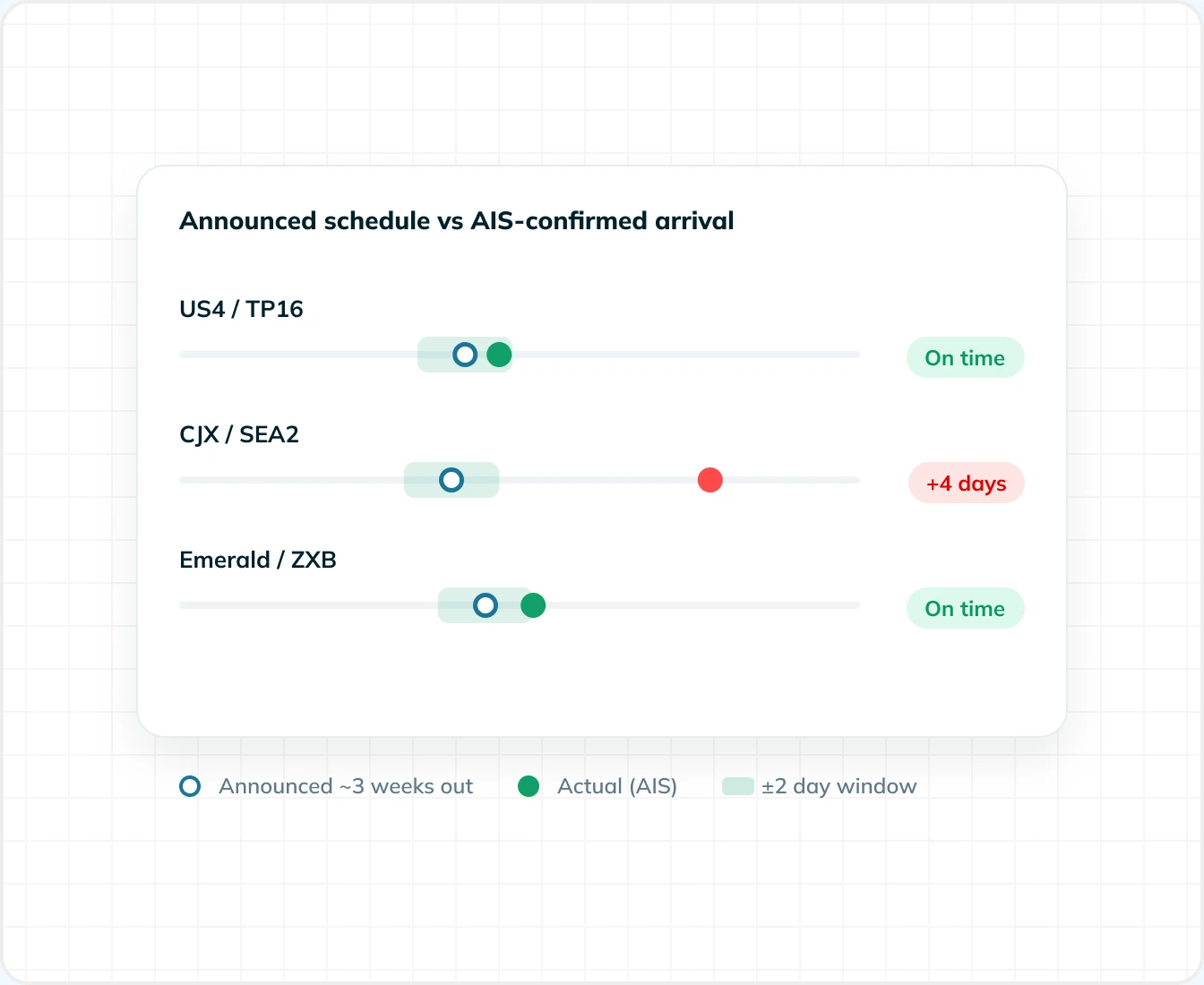
The baseline is the schedule published about three weeks before departure, when most bookings happen. It stays fixed, and Marina checks again at departure.

Includes transshipment routes
Indirect services are rated on their full route, and you can see performance by transshipment port.
Shows your contract position
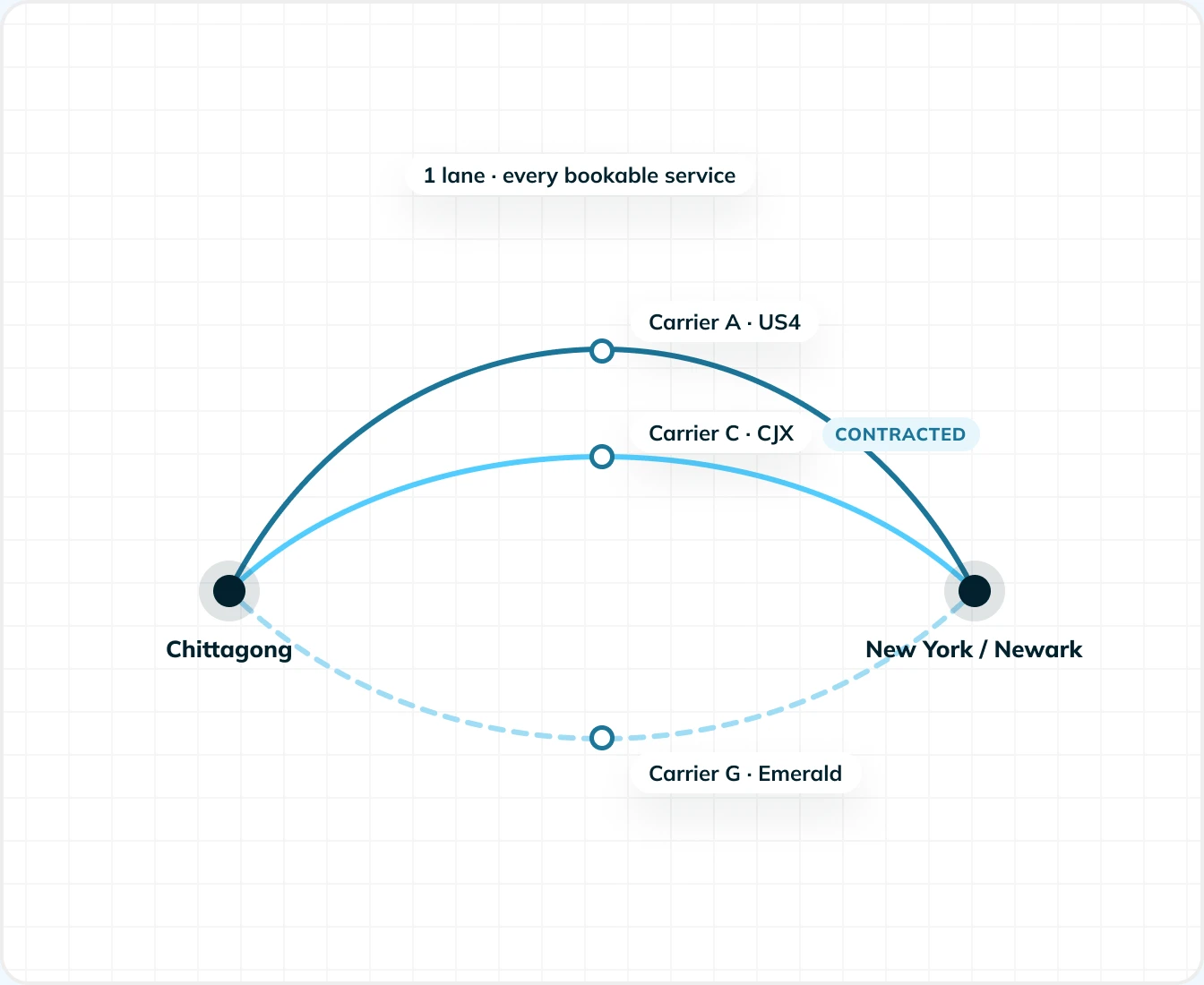
Your contracted carriers are tagged and compared with the lane average.

Works with your other tools
Marina's reliability data feeds Reef, the Routing Agent, and forwarders can embed Marina's views in their own platform under their own brand.
What does Marina do?
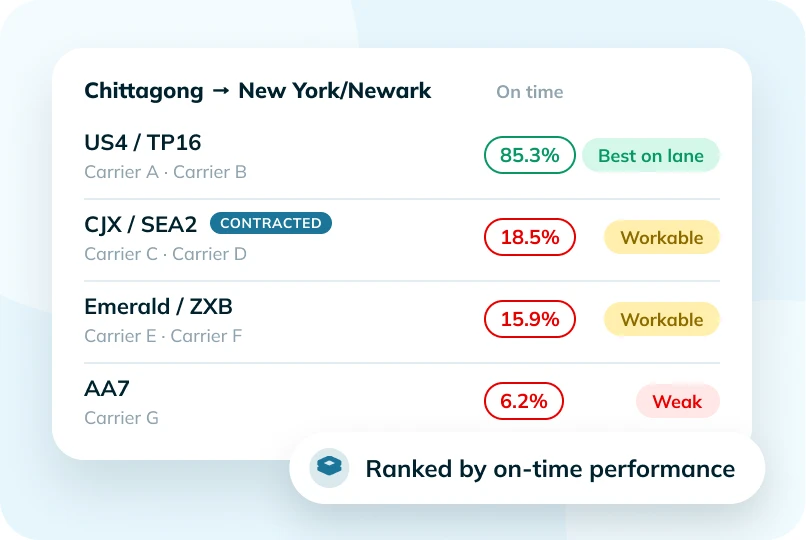
Benchmarks carrier and service-level reliability by lane and service
Every carrier and service on the lane is ranked by on-time performance, with a rating, the number of completed voyages, the trend and the average delay. You see who holds their schedule on the lane you ship.
You pick carriers based on how they perform on your lane.
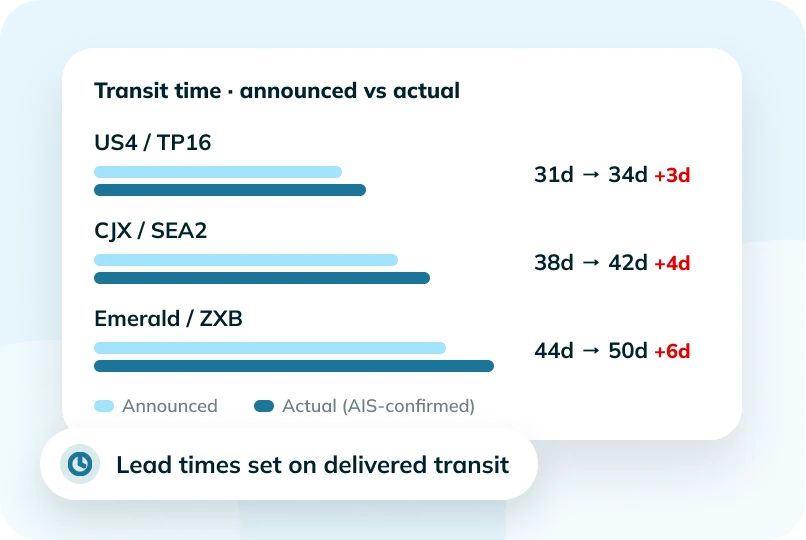
Compares announced vs. actual transit time
See how long the carrier said the trip would take and how long it took. Use the real number to set lead times.
Lead times built on delivered transit time are easier to defend.
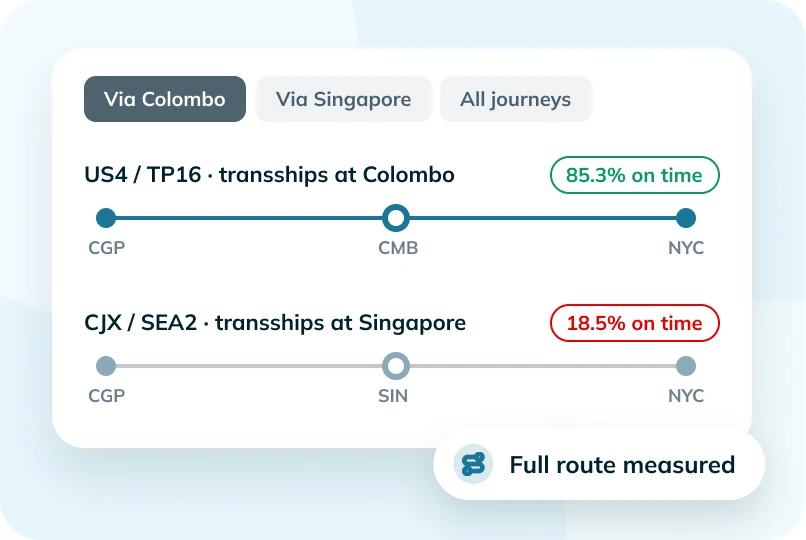
Covers direct and transshipment routes
Direct and indirect options sit side by side, so you can compare every way to book the lane.
You see the connections that most benchmarks leave out.
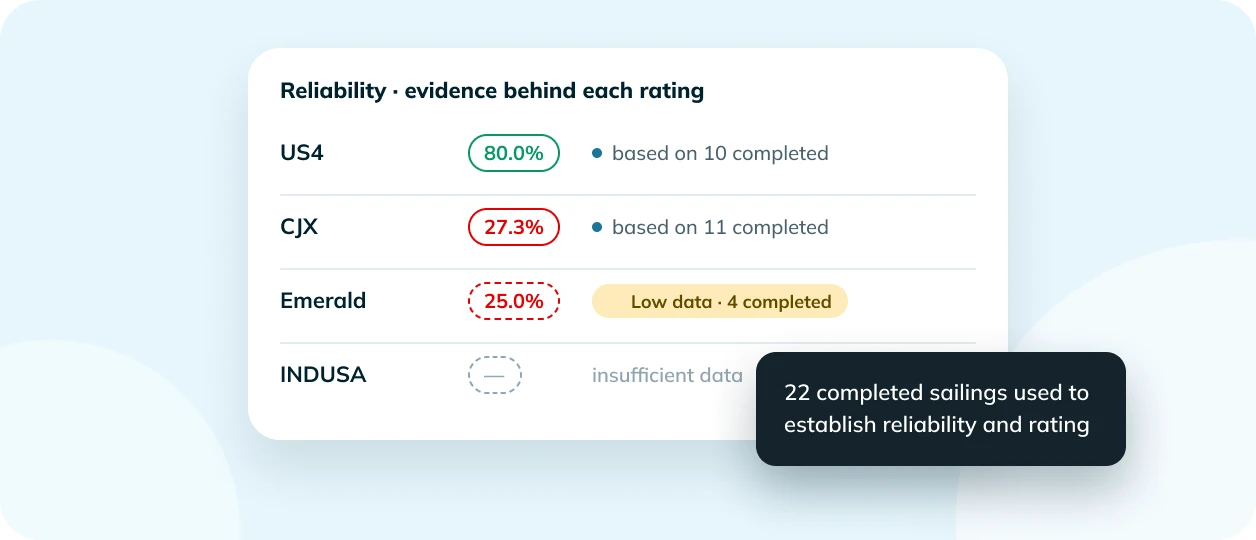
Shows the evidence behind each rating
Each rating shows the completed voyages and the period it covers. A service with too few completed voyages shows “insufficient data”.
You can tell a solid record from a thin one before you use it in a negotiation.
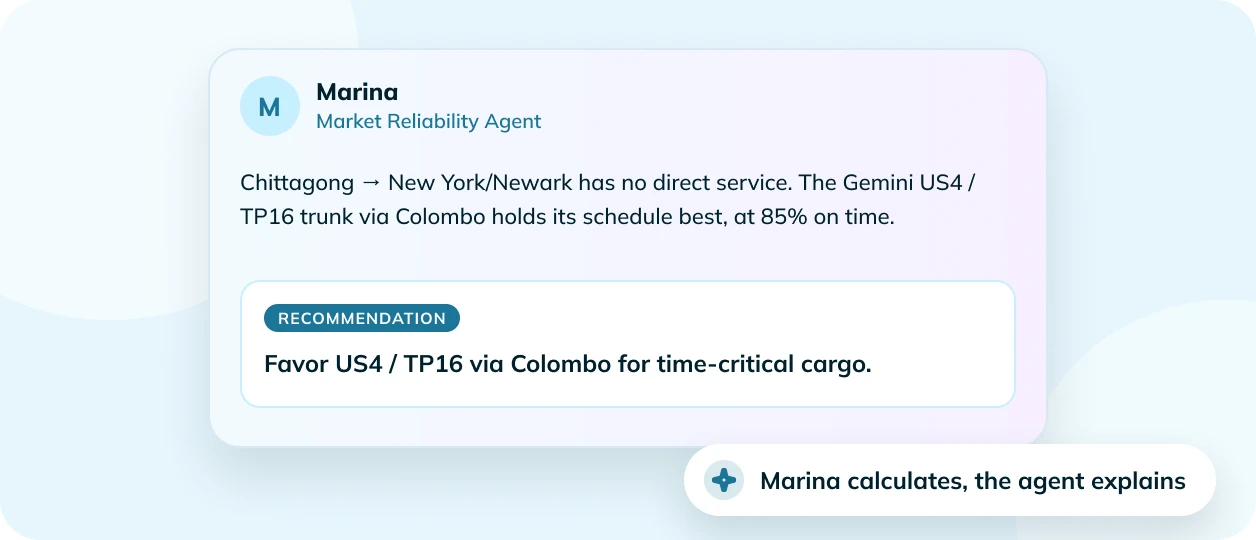
Tells you what it means
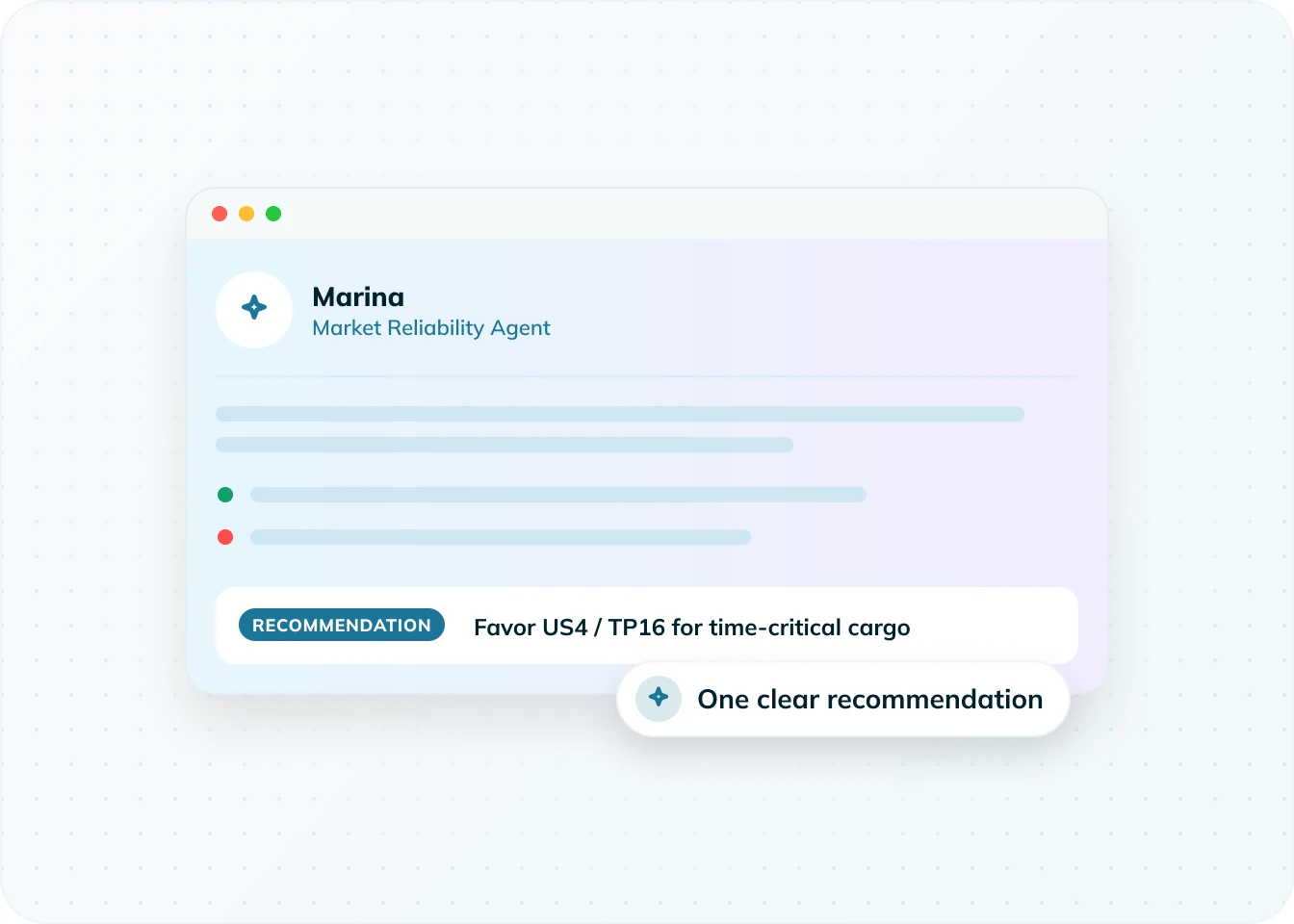
The agent gives one verdict, the evidence and one recommendation, for example which service to favor for time-critical cargo. Marina calculates every number, and the agent explains it.
Operators and customers get the finding in a few sentences, with no spreadsheet to read.
How do procurement and operations teams
use Marina?
Carrier tenders and contract negotiations
Negotiations rely on carrier-supplied claims and trade lane rankings.
Score every carrier bidding for a lane on on-time performance and announced vs actual transit time, and see how your contracted carriers compare with the lane average.

A stronger negotiating position backed by evidence.
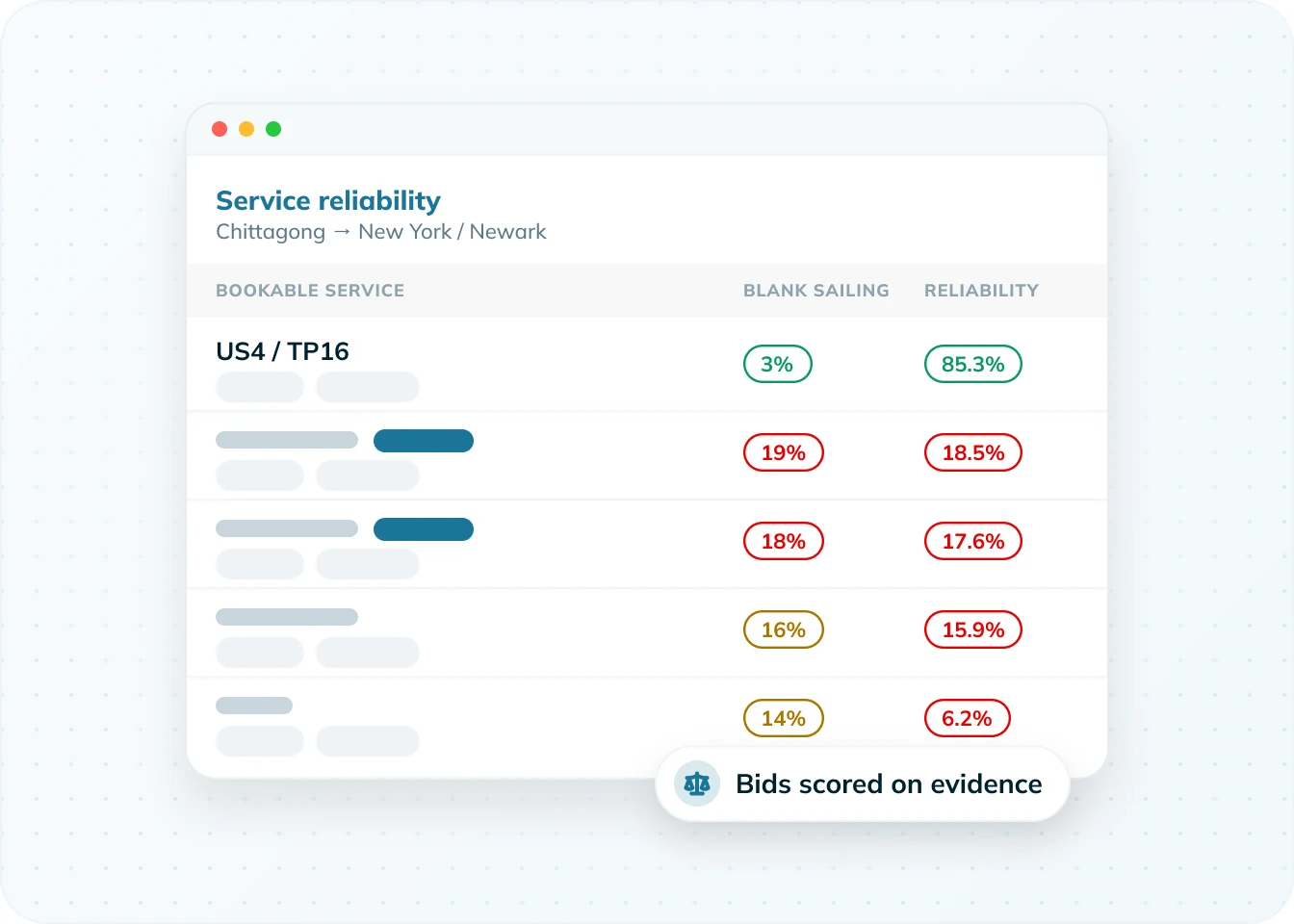
Choosing which service to book
Services are chosen on rate and habit, and reliability is assumed.
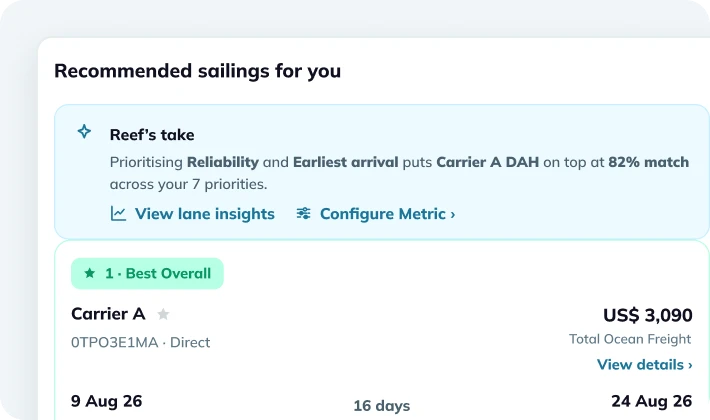
Compare the services on a lane side by side on on-time performance, transit time and transshipment. The recommendation points to the stronger service for time-critical cargo. To rank sailings for a specific booking, Reef, the Routing Agent, uses Marina's reliability data.
Better-informed, consistent booking choices.
Setting lead times you can defend
Lead times are set once from published schedules and rarely revisited.
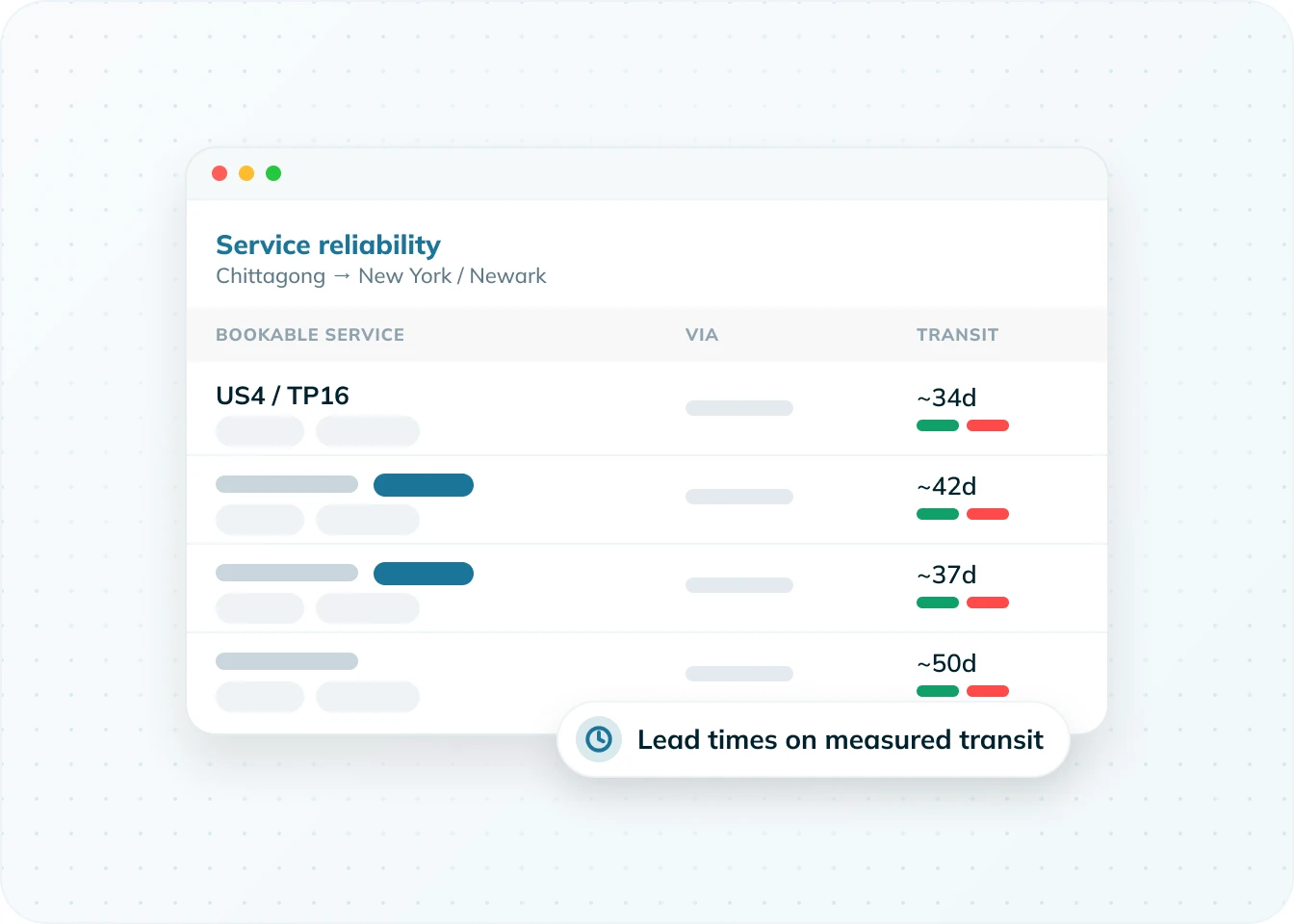
Base lead times on measured transit time, including multi-leg routes. Marina shows the lanes with too little buffer and the lanes with too much.
Lead times that fit what carriers deliver.
Pricing premium services on proof
Premium routings are sold on carrier claims and relationships.
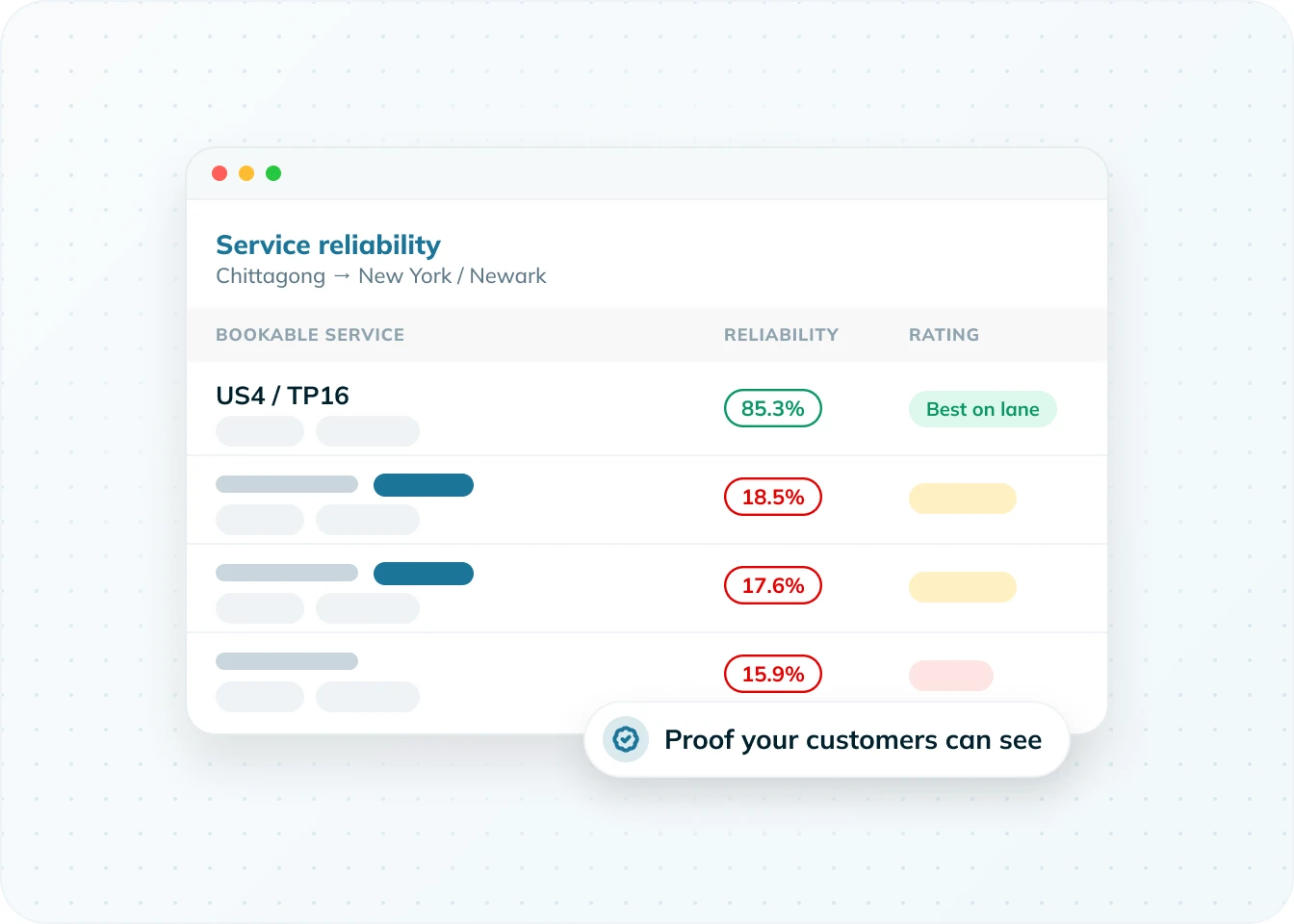
Check that the faster service really runs on time on that lane before you price it. Cargo owners can use the same view to see what a premium service buys them.
Better margin on premium services and an answer ready when a customer asks.
Reliability inside your own platform
Building reliability views in-house takes a development project.
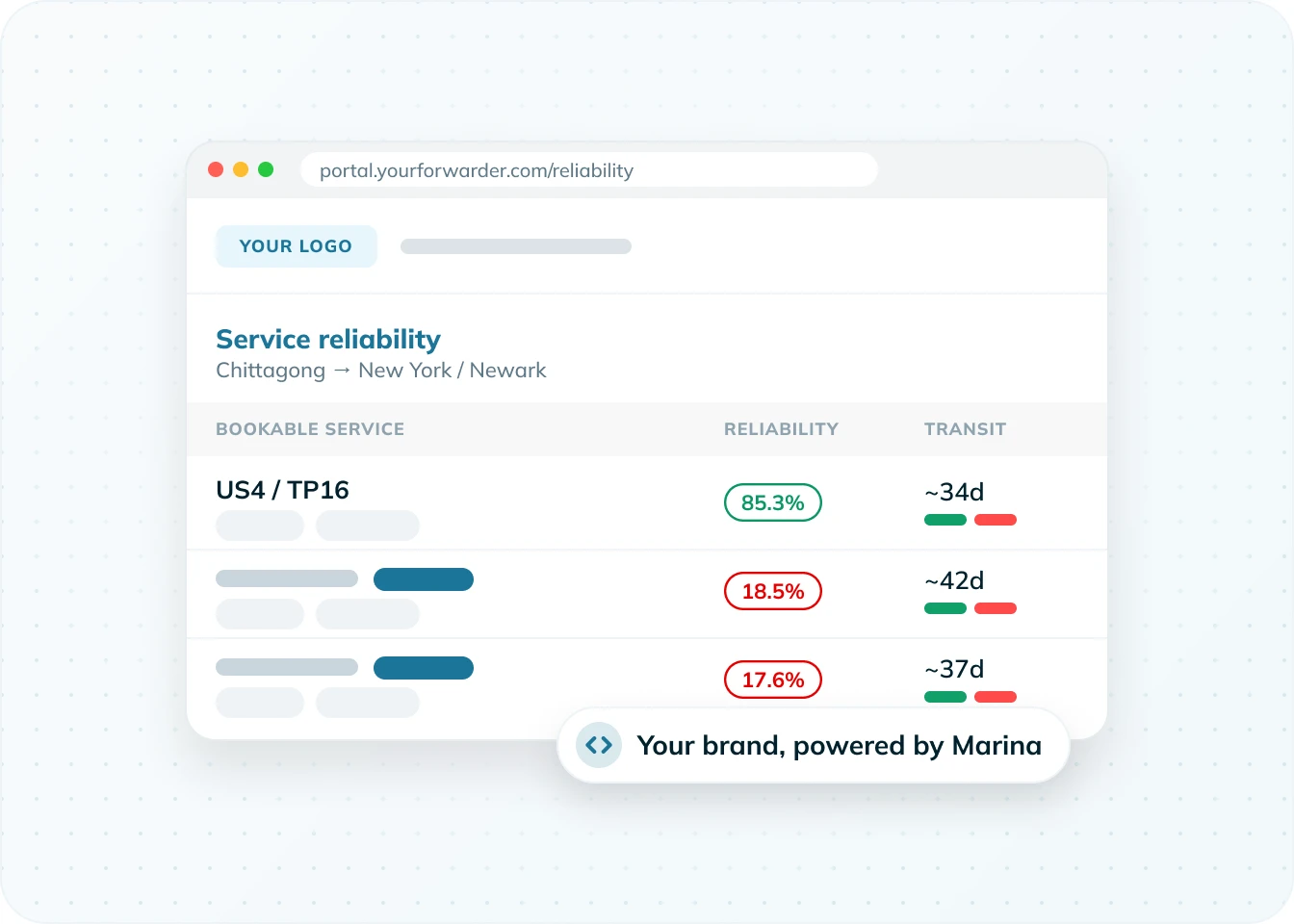
Embed Marina's views in your customer platform under your brand, and pass the lane and your preferred carriers in the URL.
A better customer experience without building the data layer.
How does Marina measure schedule reliability?



What does Marina
save in practice?
A global freight forwarder ships about 143,000 containers a year on 58 contracted lanes. Marina benchmarks every carrier and bookable service on those lanes, 412 services in all, so procurement, operations and sales work from the same evidence instead of carrier claims.
in estimated value from stronger tender outcomes, across about $141M of freight spend.
in estimated savings from lead times set on measured transit time, with about 138 fewer expedited or rebooked shipments a year.
in estimated margin from premium services priced on proof, across about 1,290 extra premium bookings a year.
Your own volumes, rates and costs will give a different figure.
What our customers say




My team used to pick services by habit and by what the carrier's rep told us. Now we open Marina, see how each service on the lane has actually run, and book with confidence. When a customer asks why we chose a service, we have an answer.
How is Marina different from carrier claims and trade-lane averages?


How do Marina, Reef and Darya, Portcast's AI agents, work together?
Three agents cover the life of a booking. Each one builds on the one before, and your team approves every step.
Marina
Benchmarks every carrier and bookable service on your lanes, so tenders, contracts and lead times start from delivered performance.
Reef
Ranks live sailings for the booking against your priorities, using carrier and service-level reliability data, and recommends the best fit.
Explore Reef →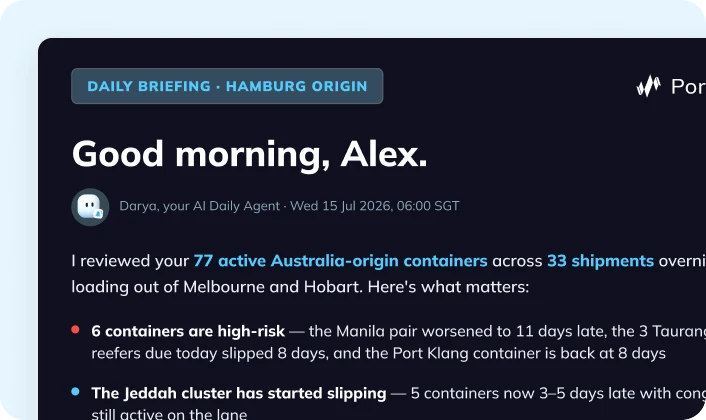
Darya
Reviews every shipment overnight, ranks what needs attention, and flags when a booking needs a different sailing.
Explore Darya →What do teams ask most about Marina?
Any other question that isn’t mentioned? Don't hesitate to get in touch.
What is Marina, the Market Reliability Agent?
What does “market” mean in Market Reliability Agent?
How is Marina different from other carrier performance benchmarking tools?
How does Marina define on-time?
Why do Marina's numbers differ from published reliability indexes?
Does Marina cover transshipment routings?
What coverage does Marina have?
How is Marina different from the Logistics KPI dashboard?
Can Marina be used as carrier selection software for tenders?
How does Marina connect to Reef, the Routing Agent?
Does Marina book for us?
Can we embed Marina in our own customer portal?
Does Marina work for both cargo owners and forwarders?
Where can you learn more about Portcast AI agents?



Want to see how the carriers on your lanes really perform?

 Book a demo

